
Contract Terms With An Affordable SEO Firm

Access Cost-Effective Organic SEO Results with Marketing1on1.com

Did you know a clear search strategy can double qualified traffic for many companies within a year?

Marketing1on1.com is a U.S.-focused partner that delivers measurable results through proven affordable website SEO services tailored to different businesses and company sizes.

The team connects search engine optimization efforts directly to business objectives so results compound gradually instead of dropping after a short-lived spike.

During the early phase, the focus is on site foundations and on-page components, enabling growth to scale in a stable and efficient way.

In this Product Roundup, you’ll see a preview of audits, content creation, authority-building, and ongoing optimization cycles that lead to higher rankings, more qualified visits, and stronger conversion rates.

Look forward to transparent explanations of services, pricing, and process, supported by case examples that link services to results and reporting that keeps your next actions easy to understand.

affordable SEO

  • Marketing1on1.com offers U.S.-centered seo services that aim for measurable, long-term results.
  • Work begins with a strong website and on-page fixes to enable scalable growth.
  • The service mix covers audits, content work, authority-building, and continuous optimization cycles.
  • This firm ties search engine optimization to business goals and provides clear, easy-to-read reporting.
  • They work with both new ventures and mature organizations aiming for improved visibility and higher-quality traffic.

Why Marketing1on1.com Is Structured for Affordable, Long-Term Search Expansion

Sustainable search gains are rooted in a foundation that emphasizes lasting technical fixes and strong content.

The team favors a strategy-first approach that ties every task to measurable goals. This reduces wasted effort and improves performance over time.

Marketing1on1.com tailors services to each client’s maturity, channel mix, and competitive landscape, which helps reduce acquisition costs as rankings build.

  • Transparent scopes, milestone timelines, and budget protections keep projects on track.
  • Cross-industry experience creates repeatable playbooks for different SERP types and markets.
  • Close collaboration with clients uses shared dashboards and regular check-ins for clarity and accountability.
Key Aspect Why it Matters What the Agency Delivers
Technical and Content Foundation Builds compounding authority and lowers long-term costs Technical fixes, content hubs, and structured internal linking plans
Strategy & Prioritization Ensures work stays focused on outcomes instead of vanity metrics Strategic roadmaps supported by milestone-driven planning
Testing & Refinement Focuses resources on highest ROI tactics Continuous experiments and quarterly reviews

By combining practical testing, tight communication, and durable assets, this marketing agency scales search engine optimization efforts without bloated spend. The result: steady growth and clearer returns for clients.

Understanding Affordable Organic SEO for U.S.-Based Businesses Today

U.S. organizations require clear principles to extend their marketing budgets and continue generating trackable search gains.

Defining “Affordable” Organic SEO Without Sacrificing Results

Affordable here means prioritizing the highest-impact tasks first. Teams sequence work over time so every dollar targets core metrics.

Marketing1on1.com structures scopes so each company pays for SEO agency Marketing 1on1 that drive results, not bloated line items. That keeps pricing tied to measurable outcomes.

Aligning budgets with realistic timelines and goals

How long results take depends on competition, site condition, and content resources, and expectations are clarified early so everyone stays aligned.

  • Budget tiers determine the pace for technical fixes, content creation, and authority-building activities.
  • Company objectives and seasonality shape pricing so sprints can flex around campaigns and launches.
  • Transparent reporting shows where money goes and what delivers return.

When teams prioritize durable assets like pillar pages, evergreen articles, and internal links, search value increases steadily over time. Marketing1on1.com supports companies in balancing this foundational work with quicker wins, allowing momentum and long-term stability to grow together.

Marketing1on1.com’s Organic SEO Service Suite and What You Get

Our lineup groups technical fixes, content work, and outreach into parallel tracks for faster impact. Each offering is delivered by a cross-functional team that handles both strategy and execution.

Comprehensive Technical Audits and On-Page SEO Optimization

Comprehensive audits identify crawl barriers, indexation issues, Core Web Vitals opportunities, and metadata gaps. Findings feed an action plan with prioritized fixes and estimated timelines.

On-page work includes title and header refinements, schema recommendations, internal linking patterns, and media enhancements to improve relevance and user experience.

Content Strategy, Keyword Targeting, and Editorial Support

The content service covers keyword mapping, content briefs, publication calendars, and updates to existing assets. Editorial workflows include approvals and feedback cycles to keep launches on schedule.

Authority-Building via Digital PR and Strategic Link Outreach

Authority work uses digital PR, targeted outreach, and partnerships to earn high-quality links aligned with brand positioning. Link targets are chosen to support the content roadmap and conversions.

Tracking, reporting, and performance reviews

The team provides ongoing analytics setup, custom dashboards, and KPI-focused reviews, while regular reporting keeps performance transparent and everyone aligned on what matters most.

Service Track Main Deliverables Primary Outcome
Audits & Technical Crawl report, Core Web Vitals fixes, metadata plan Better indexation and faster-loading pages
On-Page & Content Titles/headers, content briefs, editorial calendar Increased relevance and higher-quality, more qualified traffic
Authority and Outreach Digital PR, link outreach, partner placements Stronger domain-level signals and more valuable referral traffic
Management and Reporting Custom dashboards, KPI reviews, and ongoing roadmap updates Transparent accountability and clearly measurable progress

Service tiers are customized to client needs, balancing quick wins with foundational fixes so early traction and durable gains compound together. The team runs technical, content, and authority tracks in parallel to maximize rankings, engagement, and conversions.

How Our SEO Process Drives Sustainable Rankings and Traffic

We build momentum by sequencing short sprints that produce quick wins and larger structural gains over time. The approach ties every task to measurable goals so gains compound, not plateau. That focus turns small wins into lasting domain strength and steady growth.

Discovery Work, Benchmarks, and Sizing the Opportunity

Work begins with discovery sessions that clarify the business model, ICPs, and key goals, then moves into benchmarking current rankings, traffic channels, and technical baselines to measure true opportunity.

Roadmapping sprints and prioritizing quick wins

Insights from discovery turn into sprint roadmaps, where early tasks combine metadata improvements, internal linking, and content refreshes with structural upgrades to capture value quickly.

Iterating with Tests, Learnings, and Measurable Change

We run test-and-learn cycles that validate hypotheses and link each change to performance metrics. Cohort analysis and page-type segmentation show what to scale or de-prioritize.

  • Weekly standups plus monthly reviews maintain momentum and ensure clear owner accountability.
  • Roadmaps adapt as competitors shift, seasonality arrives, or new demand appears.
  • Success metrics are designed to connect directly to revenue impact, ensuring results reflect true business value.
Stage Focus Result
Discovery Benchmarks & goals A quantified view of the opportunity
Sprints Quick wins + structural fixes Early lift, durable gains
Iteration Testing and cohort-based analysis Improved performance and results

Pricing and Packages: Transparent Options for Every Company Size

Clear tiers make it simple to match services to team size and goals. Our pricing is structured so companies can pick a plan that fits current needs and scale up as demand grows.

Entry-Level Starter Plans for Small Businesses

These starter packages emphasize foundational improvements and priority content, featuring site health reviews, basic metadata updates, and a consistent schedule of crucial pages.

The packages are priced at accessible monthly rates and concentrate on measurable early wins for small organizations.

Growth-Level Plans for Teams in Scale Mode

Growth tiers add deeper technical work, faster publishing cadences, and expanded authority-building.

They suit in-house marketing teams that need higher throughput and faster momentum.

Custom engagements for complex sites

These bespoke plans handle enterprise audits, multi-country setups, and extensive site migrations.

Deliverables, meeting cadence, and reporting depth are calibrated to project scope and site size.

  • Staffing and response times scale with package level to protect quality.
  • Transparent pricing models list inclusions and guardrails to limit change orders.
  • Optional add-ons like analytics upgrades or conversion rate optimization are available when they demonstrably support outcomes.
Plan Core Deliverables Ideal For
Starter Plan Foundational fixes, core content Small businesses
Growth Technical depth, publishing cadence, outreach Teams in active growth mode
Custom Plan Bespoke audits, migrations, international Complex environments or full enterprise sites

Align plan choice with your priorities, available resources, and desired time frame to maximize return. We’ll help recommend the right tier so expectations are set clearly from the start.

Case Studies: Proof of Real-World SEO Impact

Below are concise case studies that link Marketing1on1.com’s methods to practical results for U.S. companies. Each example credits specific tactics rather than raw numbers to keep findings general and reproducible.

Boosted Visibility for Local Service Providers

For a local service business, a mix of GBP tuning, refined location pages, and organized review management raised map-pack visibility and generated more inbound calls.

Improved citations and standardized, templated location pages created consistency and made it easier for search engines to surface local results.

Ecommerce Category Growth via Content and Technical Fixes

One ecommerce engagement centered on refining category structure, enhancing collection schema, and enriching product content, with link reclamation and outreach helping lift rankings and create stronger revenue opportunities.

By updating navigation and collection templates, the team cut down on duplicate content and made crawl paths clearer, improving indexation.

  • Technical fixes reduced wasted crawl budget and improved indexation of priority pages.
  • Remapping keywords to pages that better matched intent increased click-through rates and overall session quality.
  • They tracked leading signals like impressions, average rankings, and entrance pages to validate performance trends prior to visible revenue changes.
  • Close collaboration on content sourcing and approvals shortened time-to-impact.
  • Durable gains followed when foundations were fixed and content categories were reinforced with internal linking.
Case Focus Core Tactic Result
Local Services GBP, location pages, reviews Improved map visibility and an increase in inbound calls
Ecommerce Category schema work, richer content, and link reclamation Higher rankings and stronger revenue uplift potential
Technical remediation Crawl path fixes, dedupe resolution Better indexation and a more efficient crawl pattern

Performance Metrics We Focus On to Demonstrate ROI

Clear metrics and standardized dashboards make performance easy to see for every stakeholder, combining directional signals with outcome-driven measures so teams can connect work to business impact.

Organic traffic, rankings, and share of voice

Dashboards visualize rankings progression, traffic quality, and share of voice across priority topics. Directional metrics like impressions and average position sit alongside engagement signals to show momentum.

Measuring Conversions, Lead Quality, and Revenue Effect

Conversions and pipeline influence are monitored with conservative attribution, while lead quality is evaluated using form completeness, intent signals, and sales follow-up to confirm revenue impact.

  • We segment by page type, search intent, and funnel stage to uncover high-return opportunities.
  • Triangulate analytics and CRM data for high-confidence attribution.
  • We define baselines and target levels upfront, ensuring performance is judged on fair standards.
  • Reporting runs on a regular schedule, featuring weekly dashboards and deeper monthly insight sessions.
Key Metric Purpose Action
Traffic & Impressions Spot changes in demand Prioritize content and titles
Rankings & Share Measure visibility Refine targeting and assets
Conversions and Leads Demonstrate revenue influence Validate with CRM

Keyword Strategy That Aligns with Customer Intent Throughout the Funnel

An intent-first keyword map lets teams align content with true buyer moments across the funnel. Head, mid, and long-tail queries are grouped by intent, and each cluster is assigned to the most suitable page type.

Research blends competitive gap analysis, seasonality, and key SERP features to set realistic targets. That workflow prioritizes pages that can win featured snippets, comparison slots, or local packs.

Every content brief does more than list a topic; it outlines angles, subtopics, internal link targets, and schema recommendations to sharpen search relevance and click-through potential.

Bottom-of-funnel assets — comparison pages, solution guides, and case-driven proof — support sales while ranking for purchase queries.

Content in the mid-funnel educates prospects, improves brand recall, and fills remarketing and email nurture programs with engaged audiences.

Top-funnel guides build category authority and attract backlinks over time. Marketing1on1.com revisits the keyword universe quarterly to reflect demand shifts and new services or products.

Intent Associated Page Type Sample Asset
Top Guides / Pillars Category guide
Mid Funnel Explainer or tutorial pages How-to article series
Bottom of Funnel Comparison pages or case-focused pages Solution guide with proof

On-Page and Content Optimization That Builds Topical Authority

By taking a deliberate approach to content, teams build topical depth and enable key pages to maintain strong visibility.

Marketing1on1.com crafts search-focused content briefs that start with target queries and SERP analysis. Each brief lists an outline, evidence requirements, suggested media, and the conversion intent for the page.

Search-Led Content Briefs and Strategic Internal Linking

Each brief spells out headings, example snippets, and reference sources so writers can deliver useful, trackable content, improving speed and consistency across the site.

The agency uses an internal linking framework to route authority toward cornerstone hubs. Links follow crawl-friendly patterns and use descriptive anchor text to boost topical relevance.

Signals that build trust and credibility

On-page optimization covers headers, optimized media, schema markup, and clear calls-to-action. These elements increase engagement and make pages easier to interpret for search engines and users.

To strengthen E-E-A-T, Marketing1on1.com assigns subject-matter experts, adds credentialed bylines, and cites reputable sources. Transparent sourcing helps pages win trust and links.

Maintenance cycles keep content current by refreshing data, expanding sections, and updating metadata, and the team runs A/B tests on titles and on-page tweaks to measure ranking and engagement lifts.

Process Outcome Typical Frequency
Content brief + SERP audit Intent-aligned pages Per new or updated asset
Internal linking plan Stronger hub pages and clearer crawl paths Typically quarterly
Maintenance & testing Ongoing performance improvement Monthly

Off-Page SEO and Ethical Link Building for Enduring Authority

A rigorous, quality-first link policy protects rankings and builds real search credibility. Our approach avoids risky shortcuts and focuses on relevance, editorial standards, and lasting placements.

Outreach targets publications and authors whose audiences match the message. Editorial fit, topical alignment, and genuine audience value are non-negotiable criteria.

Marketing and digital PR efforts revolve around data-driven stories, expert insights, and thought leadership pieces that gain coverage organically, drawing attention and links without manipulative tactics.

  • Working with industry communities and specialized publishers generates links that meaningfully support visibility and expansion.
  • They review link profiles on a routine basis to eliminate harmful referrals and close authority gaps for key themes.
  • In-house teams and agencies work together on messaging, approvals, and cadence to accelerate campaign delivery.
Activity Why It Matters Resulting Deliverable
Editorial outreach Pursues high-trust placements that influence search signals Placement reports and outreach logs
Digital PR Generates earned coverage and natural links through newsworthy assets Press coverage, data-driven stories, and citation tracking
Link Profile Management Reduces toxic risk and strengthens topical authority Audit results, disavow suggestions, and authority gap analysis
Partnership development Secures repeat placements from niche communities and associations Partner list and placement calendar

They report on acquired links, referring domains, and the influence of placements against growth metrics, allowing stakeholders to track how outreach drives visibility and quantifiable improvement.

Local SEO Solutions for U.S. Markets and Multi-Location Brands

Winning nearby customers starts with clear business listings and pages tailored to each market.

Optimizing GBP and Crafting a Location Page Strategy

Marketing1on1.com tunes Google Business Profile listings for accuracy, correct categories, and full attributes to boost local prominence.

Location pages feature unique content, localized schema, and focused internal links to reduce overlap between close markets, with each page crafted around local intent and tied back to the main hub.

  • Structured review workflows and response standards raise trust and help influence local pack rankings.
  • NAP consistency is enforced across directories and partners to avoid signal confusion.
  • Service-area businesses receive localized hub pages and city-specific FAQs designed to capture regional queries.

Reports spotlight call volume, direction requests, and discovery queries, helping teams prioritize markets with strong demand and align marketing with field operations.

Metric Why it Matters Next Step
Calls and direction requests Shows real local demand Allocate budget to high-opportunity locations
Discovery queries Reveals search intent and gaps Develop localized FAQs and service pages
Review volume and rating Impacts trust and rankings Launch review generation and response workflows

How SEO Integrates with PPC and Wider Digital Marketing

Shared signals between paid and organic teams help campaigns tap more demand with greater efficiency.

Shared keyword intelligence keeps paid and organic strategies aligned, reducing cannibalization and improving blended ROI.

Aligning Shared Keywords and Landing Pages

Marketing and paid teams map keywords together to pick winners. Paid volume shows immediate intent while seo data shows long-term opportunity.

Landing pages share consistent messaging, quick load speeds, and clear CTAs, which improves PPC Quality Scores and strengthens engagement from organic search.

Channel Connection What it Shares Primary Benefit
Paid ↔ Content Ad query insights and top-performing headlines Faster copy tests and better landing relevance
Content ↔ PPC Top pages and user paths Reduced CPC and higher engagement
Remarketing High-intent organic segments Higher conversion rates and improved lower-funnel lift

Paid search experiments help identify promising content topics, while content work surfaces new paid keywords worth bidding on.

Aligned schedules, shared tracking frameworks, and transparent reports give management the insight needed to shift budget toward channels and services that produce real conversions.

Choosing an SEO Agency and Where Marketing1on1.com Fits In

Picking an SEO agency should resemble hiring a trusted extension of your marketing group, guided by clear outcomes and a structured vetting checklist.

Experience, Communication, and Accountable Reporting

Look for relevant case studies, sector experience, and senior leadership involvement on your account, and request timelines that tie deliverables to milestones.

  • Communication cadence: weekly touchpoints, escalation paths, and one owner for delivery.
  • Accountable reporting: annotated timelines, clear KPIs, and prioritized next actions.
  • When comparing proposals, connect each line item to a business outcome and confirm the named resources.

Marketing1on1.com satisfies these criteria through seasoned leads, defined processes, and clear measurement, offering sample reports and reference clients so you can validate the fit before starting.

Vetting Factor What You Should Expect Why It Matters
Case Alignment Relevant examples and references Shows proven results in your vertical
Senior involvement Named senior leads and a regular review cadence Ensures quality and strategy continuity
Reporting quality KPIs, timelines, and actionable next steps Supports accountability and clarifies what to do next

Affordable Organic SEO Strategies

A lean search approach focuses on three things: fast diagnostics, on-page fixes, and a scalable content framework. Start by finding crawl barriers and conversion leaks. Then fix metadata, headings, and internal links so priority pages can perform.

Use targeted authority-building once core pages show lift. Outreach and digital PR amplify early wins and lock in competitive positions for key categories. This staged play keeps spend efficient while boosting visibility and traffic quality.

  • Prioritize high-impact diagnostics and quick site fixes.
  • Develop repeatable content frameworks that expand easily with rising demand.
  • Apply authority campaigns selectively to support priority pages.

As you evaluate seo providers, prioritize transparent reporting, sector specialization, and pricing structures that connect costs to deliverables, while tracking visibility, referral quality, and pipeline impact to confirm budget efficiency.

Decision Area What You Should Check Expected Benefit
Diagnostics depth Audit depth and prioritization Quicker identification of blocking issues
Authority work Relevance and quality of outreach targets Amplified early gains via high-quality links
Vendor Fit Transparency, specialization, and clear pricing More predictable outcomes and tighter budget control

With flexible seo services and scalable pricing, Marketing1on1.com adapts to company maturity and competitive pressure. Work with a partner that emphasizes disciplined execution and trackable growth instead of risky shortcuts to protect your long-term results.

Conclusion

Ready to act: schedule a short discovery review so the team can benchmark your site, surface quick wins, and map a realistic roadmap.

Marketing1on1.com brings together strategy, technical audits, and consistent content production to build lasting visibility and higher-quality traffic, with a solid foundation and ongoing testing helping rankings improve over time.

Straightforward pricing, appropriately sized service tiers, and accountable reporting make progress more predictable for businesses of all sizes, while integrated digital marketing — from ppc to content alignment — amplifies gains and accelerates performance.

If you want measurable results, connect with the team to review goals, choose the right plan, and begin compounding search engine optimization and broader marketing outcomes tailored to your market.
Common Issues With Water Regulator Valves And How To Fix Them

Water Pressure Regulator Valves: Installation & Benefits

Fact: municipal mains can reach 150–200 psi, which is enough to burst fittings and wear out fixtures quickly.

This short guide shows how a brass, dome-shaped control device fits right after the main shutoff to cut incoming force to about 50 psi. That setup protects pipes, appliances, and fixtures against leaks and premature failure.

Readers will learn where the pressure water regulator unit installs on the main line, what internal parts do, and simple tests to see if a replacement is due. The piece also breaks down costs, from common part prices to what professional installation might cost.

Installation Parts Supply serves as the go-to retail source for parts, fittings, and tools mentioned here, so homeowners can find what they need quickly.

By the end, they’ll see how reducing high force keeps a home plumbing system safe and how a small investment can prevent expensive damage later.

water regulator pressure

What Water Pressure Regulator Valves Do – And Why They Matter in Your Home

Homes run better when a central unit keeps inlet force in a stable, safe range for all downstream plumbing.

That one device reduces incoming water pressure to a safe level so pipes and fixtures aren’t under constant strain. Most residential systems perform best around 50 psi, with a practical range of 40–60 psi.

How High Pressure Affects Pipes, Fixtures, and Appliances

Lowering excessive force prevents nuisance leaks, pinhole failures, and blown supply hoses. It also softens spikes that cause noisy water hammer and vibration.

Home Water Pressure Ranges: The 40–60 psi Sweet Spot

Keeping readings in that band helps faucets run smoothly, toilets fill correctly, and showers stay consistent. Dishwashers, washing machines, and other appliances last longer when they’re not subjected to constant high pressure.

  • Whole-house protection shields every branch of the plumbing system at the same time.
  • Reducing excess strain helps homeowners cut fixture drips and wasted water.
  • Installation Parts Supply stocks pressure-reducing parts and accessories to make installation quick and reliable.

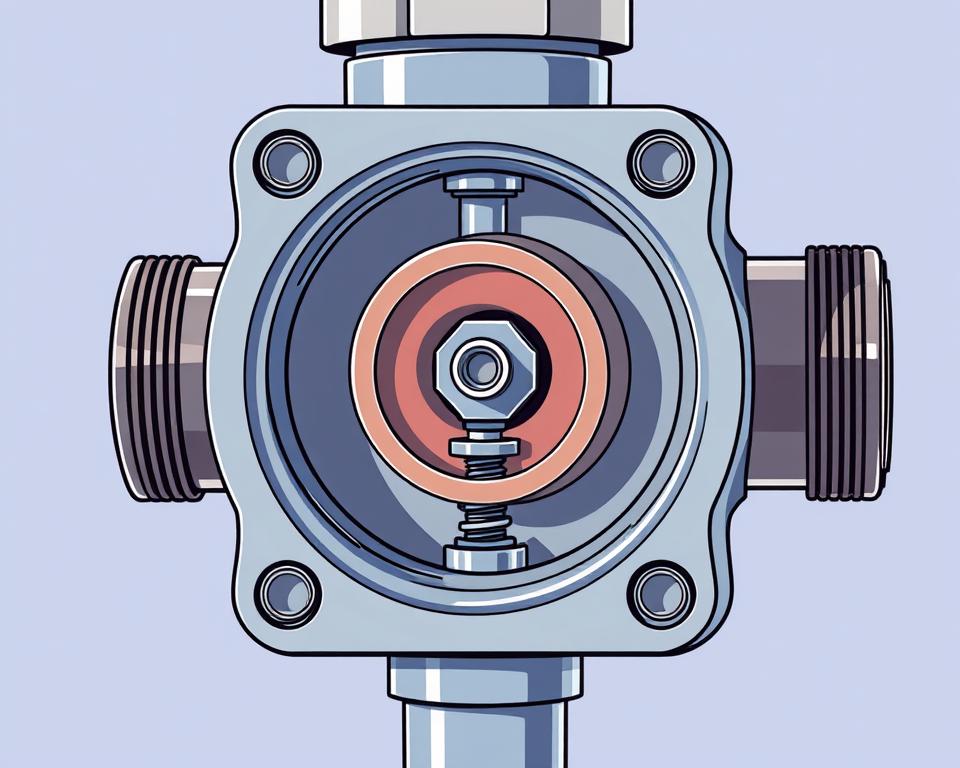
Understanding How a Pressure Regulator Works: Diaphragm, Spring, Adjustment Screw

Inside a typical home unit, a spring-loaded diaphragm continually adjusts to keep outlet levels steady.

At the heart of the device are a flexible diaphragm and metal spring that react to shifts in incoming water pressure.

When inlet force rises, the diaphragm constricts and reduces flow to the house. When supply pressure falls, the diaphragm opens so more flow can pass.

Fine-Tuning with the Adjustment Screw

An adjustment screw on the top changes spring tension to set the outlet target. By tightening the screw, you increase the tension and lower the outlet level.

If you loosen the screw, you reduce tension and let the home run at a higher level. Models with clear top access make this simple for the homeowner.

  • The diaphragm and spring keep outlet levels steady by automatic modulation.
  • This internal mechanism smooths spikes and dips so fixtures perform predictably.
  • Installation Parts Supply offers serviceable units that allow easy adjustment for long-term control.
Action Immediate Effect Homeowner Control Type
Diaphragm constricts Reduces flow and lowers outlet level Automatic
Diaphragm opens wider Increases flow and raises outlet level Automatic
Adjust screw at top Sets spring tension and outlet target Manual fine-tuning

Where It Installs: Main Water Line Enters the Home

The safest place for a control device is just after the main shutoff, at the point where the main water line enters the home.

Install the unit immediately downstream of the main shutoff so the entire plumbing system receives even outlet levels. Common locations are the basement, the garage, or a crawlspace close to the foundation wall. That position protects every branch, fixture, and appliance with a single device.

Placement after the main shutoff valve for whole-house protection

Ideally, it sits just past the shutoff so one device stabilizes the entire home. An accessible installation makes future service or replacement simple.

  • Placing it where the line enters the home lets a single adjustment affect all downstream lines uniformly.
  • If space is tight, a licensed plumber can reposition the main valve or fit unions and couplings for a neat connection.
  • Correct orientation and pipe support prevents stress from pipe weight or bumps.
  • Labeling the shutoff, device, and test points helps anyone identify components quickly.
Location Key Benefit Recommended Action
Just after the main shutoff Whole-house pressure protection Install regulator plus test points
Basement or garage Easy service access Mount on foundation wall
Tight layout May require valve relocation Call licensed plumber

Installation Parts Supply keeps water pressure regulator units, unions, and couplings sized for the main water line in stock. Using the right fittings ensures a clean connection and uniform system performance.

Do You Need One? Testing Incoming Water Pressure Today

A quick gauge check at a hose bib shows if the home is operating within a healthy psi band.

To test incoming water pressure, thread a gauge onto an outdoor spigot or the cold-water laundry tap. Ensure every tap, sprinkler, and appliance is off so the reading shows true static psi.

Check the gauge only when there is no other water flow. A steady reading between 40 and 60 psi is ideal for most homes.

Readings above 80 psi signal excessive stress on the plumbing system and increase the risk of leaks and early failures.

Signs That Suggest a Pressure Problem

Watch for banging pipes, random changes in shower flow, or recurring drips along supply lines. These symptoms often point to high psi or a failing control device.

Municipal Pressure Spikes and How to Retest

City supply can rise at night. Check at different times, particularly early in the morning, to catch spikes that daytime readings can miss.

If turning the adjustment screw no longer affects the gauge reading, the device likely needs replacement.

  • Buy a simple threaded gauge to measure static psi accurately.
  • Always test with all water off to get accurate readings.
  • Retest at night if you suspect municipal spikes.
  • Order gauges, replacement parts, and reliable units from Installation Parts Supply for fast U.S. shipping.

Selecting the Right Regulator for Your Plumbing System

Select a unit that fits the home’s demand and resists corrosion for years of trouble-free operation.

Materials That Last

Look for bronze-body construction and a stainless steel strainer. Such parts resist corrosion and cut down on service calls.

A solid body protects the diaphragm and spring so the unit keeps a steady outlet over time.

Sizing for the main line

Match the regulator size to the diameter of the main water line. An undersized valve chokes flow, while an oversized unit may cost more than needed.

When to replace

Most units have a life span of about 4–12 years. Manufacturers often suggest replacing around five years to avoid failures.

  • Choose a bronze-body valve with a stainless strainer for durability.
  • Confirm that the adjustable outlet range covers a 50 psi target without strain.
  • Replace proactively if the outlet drifts or adjustments no longer hold.
  • Ensure there is easy access to the adjustment screw and unions for future service.
Key Feature Why It Matters Typical Cost
Bronze body Corrosion resistance $50–$100
Stainless steel strainer Protects internal components Included/extra
Correct size Maintains flow at peak household use Varies by line size

At Installation Parts Supply, shoppers can order units, unions, and fittings together for a complete upgrade in one stop.

Water Pressure Regulator Valves: Step-by-Step Installation Guide

Quick prep keeps the job neat and safe. Start by shutting off the main water at the house valve and open the nearest faucet to drain residual liquid. Set a bucket and towel beneath the work area to catch drips and protect the floor surface.

Measure the regulator together with threaded couplings and mark square cut lines on the pipe. Cut the line, then clean pipe ends and fittings with grit cloth and a wire brush so solder adheres well.

Installing Couplings and Soldering

Apply flux to each surface, heat the joint evenly with a torch, and feed in solder until it wicks fully into the gap. Allow each joint to cool before you move to the next one.

Mounting, Tightening, and Leak Checks

Position the unit in the correct flow direction, hand-tighten the unions, then snug them with pliers without over-torquing. Restore supply slowly, bleed trapped air at a faucet, and inspect all joints for leaks under normal flow.

Pro Tip – When You Should Call a Licensed Plumber

If the main water valve needs to be moved or space is too tight to seat the device correctly, call a licensed plumber to reposition the main line and ensure a code-compliant layout.

  • Installation Parts Supply stocks regulators, threaded couplings, solder, flux, grit cloth, unions, and tools for a complete DIY kit.
Install Step Action Why It Matters
Preparation Shut main, drain, protect area Limits spills and hazards
Solder joints Clean, flux, heat, solder Creates leak-resistant connections
System test Restore slowly, bleed air, inspect joints Verify system integrity

Adjusting, Maintenance, and Cost Considerations

Keeping the outlet setpoint steady saves fixtures and prevents slow damage.

Dialing in psi: Loosen, Adjust, Verify

Attach a gauge to a hose bib and note the current reading. Loosen the locknut and turn the top adjustment screw in small steps.

Tightening the screw raises the spring tension and lowers the outlet setting. Loosening it has the opposite effect.

After each change, open a nearby tap briefly to stabilize flow, then recheck the gauge until the reading is steady.

Annual Checks & When to Replace

Make yearly verification part of routine maintenance. Watch for unexplained swings, ongoing banging, or recurring fixture leaks.

If turning the screw no longer changes readings or the setpoint drifts, the unit should be replaced to avoid hidden strain on the system.

DIY vs pro: costs and tools to have on hand

Typical units cost \$50–\$100, with larger lines up to \$200. Pro installation runs roughly \$250–\$450 depending on location and job complexity.

  • DIY needs include couplings, a pipe cutter, grit cloth, flux, solder, and a torch.
  • Pros bring speed, code compliance, and a service warranty.
  • Keep records of dates, gauge readings, and adjustments for faster troubleshooting later.

Where to Buy – Installation Parts Supply

For convenience, you can order gauges, replacement parts, and full installation kits from Installation Parts Supply. Many items ship fast across the United States, so maintenance and upgrades are simple to schedule.

Purchase Item Typical Price Why it matters
Residential unit (bronze) \$50–\$100 Durable body and reliable outlet control
Professional installation $250–$450 Includes repositioning main valve and warranty
DIY tool kit bundle $40–$120 Couplings, cutter, torch, flux for a complete job
Gauge \$10–\$40 Verify psi and confirm adjustments hold

Wrapping Up

A correctly sized bronze unit with a stainless strainer keeps household flow steady and helps prevent costly pipe and fixture damage.

Installed just after the main shutoff, the unit keeps outlet levels in the 40–60 psi band so showers, faucets, and appliances run smoothly. Together, the diaphragm and spring smooth out spikes from the water supply.

Routine testing and timely maintenance—often a proactive replacement around five years—avoids failures and hidden damage. For reliable, in-stock options and fast delivery, finish the project with Installation Parts Supply and enjoy quieter, longer-lasting plumbing in your home.

Common Questions

What does a regulator do, and why is it important in a home?

A regulator manages incoming mains flow to keep outgoing psi consistent. It protects pipes, faucets, and appliances from damage caused by pressure spikes or sustained high levels. Good control extends fixture life and cuts leaks and noise throughout the system.

What is the ideal psi range for a typical house?

Most homes aim for a 40–60 psi sweet spot. That range provides good flow for showers and appliances while limiting strain on fittings and seals. If readings are too high, they cause premature wear; if too low, they create poor flow.

How does a pressure regulator work inside?

Inside is a spring-loaded diaphragm that opens or closes the passage to regulate flow. Spring tension defines the target outgoing pressure and the diaphragm reacts to supply changes, smoothing spikes and drops.

How do you use the adjustment screw to fine-tune pressure?

The adjustment screw on top increases tension when tightened, raising the setpoint, and reduces it when loosened. A locknut secures the setting. You should always verify with a gauge after small adjustments to prevent overcorrection.

Where should it be installed on the main line?

It installs on the main line where the service enters the house, typically after the main shutoff. That location gives whole-house protection and makes maintenance straightforward.

How can someone test incoming pressure to know if they need one?

Attach a pressure gauge to a hose bib or the washing machine faucet and open the valve. When readings are above 60 psi or fluctuate heavily, it’s wise to install a regulator or service the existing unit.

What signs indicate an existing unit needs replacement?

Persistent pressure swings, leaking at the regulator, inability to hold set psi, or visible corrosion suggest replacement. Older models that fail frequent checks should be swapped out for newer, reliable units.

How does sizing and material choice affect performance?

Choose a body size that matches the main line plus a unit rated for the desired psi range. Durable materials like bronze bodies and stainless screens resist corrosion and clogging, improving longevity.

Can a homeowner install a regulator as a DIY project?

Yes, a capable DIYer can install one by shutting off the supply, draining lines, cutting and fitting couplings, and securing the regulator. Proper soldering or compression fittings and leak checks are critical. If repositioning or complex changes are required, a licensed plumber should be called.

How should the unit be adjusted and maintained?

Loosen the locknut, turn the adjustment screw in small increments, and recheck with a gauge. Inspect annually for leaks, debris, and spring fatigue. Replace cartridges or the whole unit if performance degrades.

What costs and tools are typical for a DIY regulator install?

DIY costs include the regulator, fittings, flux, solder or compression fittings, plus a pressure gauge. Actual expenses vary by model and materials; hiring a plumber adds labor but helps ensure correct placement and code compliance.

Where can one buy reliable parts and fittings?

Well-known suppliers like Home Depot, Lowe’s, and specialty plumbing stores carry quality regulators, bronze bodies, and strainers. Installation Parts Supply and established brands offer certified models and replacement components.

When is it better to hire a plumber instead of DIY?

You should hire a pro for complex main relocations, soldering near electrical components, code questions, or if you don’t have tools or comfort with shutting down and recharging the main line. Using a licensed contractor helps ensure the installation is safe and code-compliant.

CNC Precision Machining For Defense

Precision Engineering Solutions: CNC Precision Machined Parts

About seven in ten of modern critical assemblies require narrow tolerances to meet safety and functional targets, highlighting how small variances influence outcomes.

Precision titanium machining manufacturing boosts overall reliability and lifespan across auto, healthcare, aerospace, and electronics applications. It provides consistent assembly fit, accelerated assembly, and reduced rework for subsequent processes.

UYEE-Rapidprototype.com is introduced here as a vendor focused on satisfying strict requirements for compliance-driven industries. Their workflows combine CAD/CAM, reliable programming, and stable systems to control variability and accelerate launch.

US buyers can use this guide to weigh choices, define explicit requirements, and select capabilities that align with projects, budgets, and timelines. Expect a practical roadmap that covers specifications and tolerances, equipment and processes, material choices and finishing, industry use cases, and pricing drivers.

CNC titanium machining

  • Tight tolerance and consistency enhance reliability and reduce defects.
  • Digital workflows like CAD/CAM enable repeatable manufacturing throughput.
  • UYEE-Rapidprototype.com is positioned as a capable partner for US buyers.
  • Well-defined requirements align capabilities to budget and schedule goals.
  • Appropriate processes reduce waste, speed assembly, and reduce TCO.

CNC Precision Machined Parts: Buyer’s Overview for the US

US manufacturers require suppliers providing reliable accuracy, lot-to-lot repeatability, and reliable schedules. Purchasers expect clear schedules and parts that meet acceptance criteria so downstream assembly/testing remains on schedule.

What buyers need now: accuracy, repeatability, and lead times

Key priorities include tight tolerances, repeatable output across lots, and lead times resilient to demand changes. Strong quality practices and a capable system minimize drift and build confidence in downstream assembly.

  • Accuracy to meet drawings and functional requirements.
  • Repeatability across lots that reduces inspection risk.
  • Predictable lead times and open communication.

How UYEE-Rapidprototype.com helps precision programs

UYEE-Rapidprototype.com offers responsive quoting, DFM feedback, and buyer-aligned scheduling. Workflows leverage validated processes and robust programming to reduce delays/rework.

Lights-out automation and bar-fed cells enable scalable production with reduced cycle time and stable accuracy when volumes increase. Early alignment on prints and sampling keeps QA/FAI on time.

Capability Buyer Benefit When to Specify
Validated machining services Lower defect rates, predictable yield High-risk assemblies and regulated projects
Lights-out automation Shorter cycle times, stable runs Scaling or variable demand
Responsive quotes and scheduling Faster time-to-market, fewer surprises Rapid prototypes, tight schedules

CNC Precision Machined Parts: Specs & Selection

Clear, measurable selection criteria turn drawings into reliable production outcomes.

Tolerances, surface finish, and repeatability benchmarks

Specify precision machining tolerance targets for critical features. Up to ±0.001 in (±0.025 mm) are attainable when machine capability/capacity, workholding, and thermal control are qualified.

Tie finish to functional need. Apply grinding, deburring, polishing to achieve roughness ranges (Ra ~3.2 to 0.8 μm) for sealing or low-friction surfaces on a component.

Production volume and lights-out scalability

Choose machines/workflows for your volume. For repeat high-volume runs, consider 24/7 lights-out cells and bar-fed setups to keep throughput steady and speed changeovers.

Quality systems and in-process inspection

Require documented acceptance criteria, GD&T callouts, and first-article inspections. In-process checkpoints identify variation early and protect repeatability during a run.

  • Simulate toolpaths in CAD/CAM to reduce rounding artifacts.
  • Verify ISO 9001/AS9100 and metrology capability.
  • Document sampling and control plans for end use.

UYEE-Rapidprototype.com evaluates drawings against these benchmarks and suggests measurable requirements to reduce purchasing risk. This stabilizes production and improves OTD.

Processes and Capabilities that Drive Precision

Combining five-axis machining, live tooling, and finishing lines lets shops deliver production-ready components with reduced setups and minimal handling.

Multi-axis milling and setup efficiency

Five-axis with ATC processes multiple faces per setup for complex geometry. Vertical and horizontal centers support drilling and efficient chip flow. This reduces repositioning and improves feature-to-feature accuracy.

Turning, live tooling, and Swiss methods

Live-tool lathes can turn, mill cross holes, and add flats without extra ops. Swiss-type turning suits for small, slender components in volume runs with excellent concentricity.

Non-traditional cutting and finishing

Wire EDM produces intricate shapes in hard alloys. Waterjet is ideal for heat-sensitive stock, and plasma cuts conductive metals efficiently. Final finishing—grinding, polishing, blasting, passivation optimize surface and corrosion performance.

Capability Best Use Buyer Benefit
Five-axis & ATC Complex, multi-face geometry Fewer setups, faster cycles
Live tooling & Swiss turning Small complex runs Lower cost at volume, tight concentricity
Non-traditional cutting Hard alloys or heat-sensitive materials Accurate contours, less rework

UYEE-Rapidprototype.com combines these capabilities and controls with rigorous maintenance to maintain repeatability and schedule adherence.

Material Choices for Precision: Metals and Plastics

Selecting the right material determines whether a aluminum CNC service design meets function, cost, and schedule goals. Early material down-selection cuts iterations and helps align manufacturing strategies with performance targets.

Metals: strength, corrosion, and thermal control

Common metals include Aluminum 6061/7075/2024, steels such as 1018 and 4140, stainless steels 304/316/17-4, Titanium Ti-6Al-4V, copper alloys, Inconel 718, and Monel 400.

Compare strength-to-weight and corrosion behavior to match the application. Apply rigid workholding with thermal control to maintain tight accuracy when cutting heat-resistant alloys.

Engineering polymers: when and why

ABS, PC, POM/Acetal, Nylon, PTFE (filled/unfilled), PEEK, PMMA cover many applications from housings to high-temperature seals.

Plastics are heat sensitive. Lower feedrates with conservative RPM preserve dimensions and finish on the part.

  • Compare metals on strength/corrosion/cost to select the right class.
  • Choose tools/feeds appropriate for Titanium/Inconel to remove material cleanly and increase tool life.
  • Use plastics for low-friction or chemical-resistant components, tuning parameters to prevent warp.
Class Best Use Buyer Tip
Aluminum & Brass Light housings with good machinability Fast cycles; verify temper/finish
Stainless & Steels Structural with corrosion resistance Plan thermal control and hardening steps
Ti & Inconel High strength, extreme environments Slower feeds; higher tooling cost

The team helps specify materials and test coupons, document callouts (temp range, coatings, hardness), and match machines and tooling to the selected materials. Guidance shortens validation and reduces redesign.

CNC Precision Machined Parts

Clear CAD with smart toolpaths reduce iteration time and preserve tolerances.

UYEE-Rapidprototype.com turns CAD into CAM programs that create optimized code and simulations. That workflow reduces rounding errors and lowers cycle time while keeping accuracy tight on the workpiece.

Design for manufacturability: CAD/CAM, toolpath strategy, and workholding

Simplify features, choose stable datums, align tolerances to function so inspection remains efficient. CAM toolpath strategy with cutter selection limit idle time and wear.

Apply rigid holders with solid fixturing and ATC to reduce changeover time. Early collaboration on threads, thin walls, and deep pockets prevents tool deflection and surface finish issues.

Applications by industry: aerospace/auto/medical/electronics

Applications range from aerospace structural components and turbine blades to automotive engine items, medical implants, and electronics heat sinks. Each sector enforces unique traceability/cleanliness needs.

Managing cost: time, yield, waste

Optimized milling, chip control, and plate nesting lower scrap and materials cost. Prototype-to-production planning keeps fixtures and machines consistent to preserve repeatability at scale.

Focus Buyer Benefit When to Specify
DFM-led design Quicker approvals with fewer changes Early quoting
CAM toolpath & tooling Shorter cycles, higher quality Pre-production
Nesting and bar yield Less waste, lower cost Production runs

As a DFM partner, UYEE-Rapidprototype.com, providing CAD/CAM optimization, fixture guidance, and transparent costs from prototype to production. This disciplined system keeps projects predictable from RFQ to steady-state FAI.

Wrapping Up

Summary

Consistent tolerance control with disciplined workflows turns design intent into repeatable deliverables for demanding industries. A disciplined machining process, robust system controls, and the right mix of machines deliver repeatability on critical components across aerospace, medical, automotive, and electronics markets.

Proven capabilities and clear requirements, backed by data-driven inspection, protect quality while supporting tight schedules and cost goals. Advanced milling/turning with EDM, waterjet, and finishing—often combined—cover broad part families and complexities.

Material choices from Aluminum/stainless to high-performance polymers ought to fit function, budget, and lead time. Careful tooling, stable fixturing, validated programs lower cycle and variation so each workpiece meets spec.

Provide drawings/CAD for DFM, tolerance confirmation, and a plan from prototype to production with predictable results. Connect with UYEE-Rapidprototype.com for consultation, tailored quotations, and machining aligned to your inspection and acceptance criteria.

Belt And Road And Digital Infrastructure

Unlocking Trade: China–Europe Railway Express

In less than a decade, the China to Europe freight train has made countless voyages spanning multiple continents. Launched in 2011 and has become a game-changer in international cargo shipping. This corridor connects Asian manufacturing centers with European buyers at remarkable speed. As a component of the Belt and Road initiative, it helps secure predictable delivery windows and reliable transit.

The China–Europe freight rail link provides an efficient channel for cross-border commerce. It helps businesses meet soaring market demands. Such benefits are crucial in the current fast-moving global economy.

Shippers depend on rail networks for quick goods movement and cost savings. The China to Europe freight train is a unique solution for long-haul logistics. It is central to China’s push to grow its trade pathways. It unlocks fresh possibilities for dependable distribution across many nations.

  • Rail services speed up shipments between Asia and Europe
  • Stable freight paths support better inventory planning for businesses
  • Belt and Road objectives deepen cross-border commercial relationships
  • International logistics benefit from both faster transit and lower costs
  • Businesses tap into an efficient path for large-scale exports and imports

Getting to Know the Expanding Worldwide Trade Network

As globalization intensifies, states and enterprises search for trustworthy transport corridors spanning great distances. The China–Europe Express rail service forms a crucial element of the Belt and Road initiative. It connects Asia to Western economies, enabling industries to find quicker routes and cut emissions.

China to Europe freight train

The Role of China in Cross-Border Connectivity

China is pouring substantial investment into rail systems, tightening its connections with global markets. The China-Europe Railway Express has made over 100,000 trips, carrying over 11 million TEUs representing more than $420 billion in goods. This milestone opens new trading corridors, enhancing competitive freight options and supporting sustainable development.

Benefits for Western Markets

Firms across Western economies reap rewards from this expanding trade network. They benefit from faster delivery, resilient logistics, and decreased emissions. This interconnected rail system presents a strategic option for firms aiming to enter new markets.

Background and Goals of the Belt and Road Initiative

The BRI Videos Initiative aims to create new trade routes across Asia, Europe, and more. It aims to cut shipping costs and open up new markets for producers and distributors. The strategy weaves together road, sea, and rail systems, stimulating infrastructure expansion and encouraging global collaboration.

The China railway express stands out as a key component of efficient freight transport. It focuses on investing in rail technology, improving customs clearance, and establishing strategic routes. This supports stronger ties between Eastern manufacturing hubs and Western import markets. It further results in smoother shipping operations and stimulates local economies with fresh business prospects.

How the China Europe Railway Express Is Reshaping Transcontinental Logistics

Newly established freight-only rail corridors have introduced fresh possibilities for global trade. Firms increasingly seek accelerated shipments and improved intercontinental links. This program reduces uncertain transit delays, transforming the flow of goods between Asia and Europe.

Bridging the Gap for Chinese Enterprises

Exporters from China gain a competitive edge by reaching European buyers. Corridors like Chongqing–Duisburg demonstrate that electronics, auto components, and other goods can arrive in about half the maritime transit time. Because of set timetables, firms manage their deliveries more precisely and stay competitive in fast-paced sectors.

Boosting Efficiency in Cross-Border Logistics

Improved customs processes and dedicated schedules streamline long-distance transport. This transformation leads to faster turnaround times and more stable supply chains for companies. Cargo owners profit from more seamless coordination using consolidation services and multimodal transfers. The China railway express to Europe becomes a major asset, connecting factories to distribution hubs for rapid trade.

Unraveling the China to Europe Freight Train Advantages

For businesses looking for quicker shipping, the China to Europe freight train is a viable option. It bridges the gap between the slow pace of sea voyages and the high costs of air travel. Guided by the Belt and Road vision, new corridors support the speedy shipment of products such as electronics, cars, and raw materials to European markets.

By rail, transit times of roughly 12–18 days offer a much quicker option than ocean routes. This speed is attractive to companies that prioritize quick delivery to meet customer needs. It supports consistent growth for manufacturers who want stable cross-border supply chains.

Faster Delivery Windows

Shorter journeys mean quicker order fulfillment. Such time savings support companies of all sizes by shrinking the gap between orders and replenishment.

Cost-Efficient Rail Freight Solutions

Transporting goods by rail is typically around one-fifth the price of air cargo. It is regarded as a budget-conscious method that still safeguards product quality. The Belt and Road initiative is strengthening partnerships and infrastructure, making cross-continental trade smoother.

Strategic Importance of the China–Europe Railway Express

This China Europe Express route forms a foundation of the China Belt and Road vision. It connects Asian producers with European importers, becoming essential for large shipments. Covering 25 countries and over 50,000 kinds of goods, it offers trusted capacity for distribution networks.

For large enterprises, it delivers a quicker, more eco-conscious alternative to standard sea or air freight. This route enhances supply chain stability, allowing for better stock planning and meeting growing customer needs. It stands as a key player in international freight transport, reducing reliance on congested routes.

  • Fast deliveries that improve readiness for retail demand
  • Decreased environmental impact that underpins greener growth
  • More reliable stock planning for diverse sectors

European firms increasingly identify fresh opportunities thanks to this rail service. Consistent paths and reliable capacity help firms reach new territories. Such cooperation boosts trade and helps safeguard supply chains against global shocks.

Eurasian Rail Routes and Cross-Border Expansion

The China Belt and Road initiative opens new avenues by linking production sites with booming markets. This far-reaching network spans ports, highways, and inland terminals. It offers various routes that cut down transit times and enhance trade. The resulting synergy enhances rail logistics and pushes firms to explore faster cargo choices.

Important corridors including Xi’an to Hamburg and Chengdu to Lodz widen international reach for items such as electronics, garments, and industrial machinery. Cargo moves efficiently through integrated channels that combine trucking or barge services with rail. This approach reduces shipping costs and promotes eco-friendly practices.

Essential Intermodal Transport Hubs

Places like Xi’an in China and Hamburg in Germany serve as central hubs for diverse goods. These nodes accelerate distribution, embed digital tracking, and help resolve congestion challenges.

Hub Location Key Commodities Connectivity Advantage
Xi’an China Electronics, Apparel Robust East-West Links
Hamburg Germany Machinery, Automotive Parts Port Integration
Chengdu China Textiles, Consumer Goods Rail-Road Collaboration
Lodz Poland Various Industrial Products Strategic EU Entry Point

Effects on European Supply Chains

Industrial firms enjoy cost reductions and shorter lead times, helping them distribute widely throughout Europe. Such rail momentum supports Europe’s push toward greener logistics. It additionally creates realistic channels for continued trade development.

How Rail Logistics Strengthens International Trade

This China Europe Express rail service, central to the Belt and Road initiative, is transforming freight possibilities. It builds strong cross-border links so goods travel smoothly between major markets. High-capacity trains enable a constant flow of goods, backing ongoing shipments and satisfying rising consumer demand.

Advanced document submission simplifies customs clearance in many countries. These improvements simplify customs steps and give companies smoother experiences and faster turnaround. Real-time tracking tools add another layer of transparency, informing shippers about every key transit stage.

  • Speedier border processing thanks to accurate and protected documentation
  • Regular freight timetables that support stable inventory planning
  • Efficient transport that appeals to tech-oriented industries

These advancements enhance cross-border connectivity while keeping costs down and meeting tight deadlines. Companies can now reach global markets more easily while maintaining high quality and dependable service. Rail-based logistics is transforming international trade, helping many industries and customer groups.

Challenges and Outlook for Worldwide Trade Links

Trade corridors are expanding through rail connections, linking distant markets. The China Europe Express train, part of the China Belt and Road initiative, is reshaping global cargo movements. Checkpoints on Eurasian corridors must coordinate more closely to minimize waiting times and cope with increased demand.

Infrastructure Improvements for Long-Term Growth

Varying rail gauges make transshipment at nodes such as Alashankou necessary, which affects transit duration. This handover calls for stronger infrastructure and better tracking systems to maintain schedules. Using the 95306 freight platform enhances transparency and assists in relieving congestion during cargo handoffs.

Well-timed construction and corridor modernization open fresh opportunities for speedier and more eco-friendly logistics.

Deepening Cooperation with Belt and Road Enterprises from China

International agreements foster trust between shippers and participating countries. Combined efforts focus on stable customs policies and advanced technology that streamline long-distance freight. Close alliances with Belt and Road Chinese Enterprises support improved service standards and create more unified freight experiences along Eurasian routes.

This level of cooperation paves the way for steady progress, ensuring competitive trade advantages in the years ahead.

Common Transport Hurdles Potential Solutions
Varying Rail Gauges Upgraded Transshipment Points
Time Delays at Borders Digital Freight Platforms
Limited Cross-Border Coordination Unified Customs Agreements

The Importance of Transcontinental Railway Service Today

In today’s interconnected world, transcontinental rail routes are key for businesses needing reliable logistics. The China–Europe Express rail service belongs to the broader China Belt and Road initiative. It supports efficient cargo movement across many nations. According to Michael Schumann of the German Federal Association for Economic Development and Foreign Trade, it acts as a vital artery in worldwide supply chains. It strengthens reliability and robustness in international trade flows, including during periods of disruption. European trade associations commend its steady performance, even with port congestion.

Diversifying Supply Chains

Cargo owners profit from a balanced mix of freight choices. This approach cuts dependence on any single transport mode. It unlocks new opportunities for companies to reach a wider global network. Balancing cost, transit time, and goods protection helps firms remain competitive in shifting conditions.

Handling Customs and Regulatory Rules

Customs rules and packaging specifications can stall shipments. Well-defined rules and aligned processes streamline moves across borders. Businesses gain confidence by working with rail operators who streamline compliance. This promotes steady growth in various industries.

Advantage Outcome
Reliable Schedules Predictable transit times boost customer satisfaction
Expanded Reach Greater access for smaller exporters and importers

Innovations and Technological Advancements in Rail Freight

Digital breakthroughs are opening new avenues for global trade. The China–Europe Express rail link, within the China Belt and Road initiative, highlights the strength of modern solutions. It enhances efficiency over long distances. Automated inspection equipment at border crossings increases accuracy, reducing wait times.

Sophisticated freight scheduling systems also play a crucial role. They help minimize congestion on busy routes, keeping shipments moving smoothly. These improvements underscore how vital a future-ready system is for on-time deliveries.

Modern transcontinental railway service leverages digital platforms like 95306. They deliver live tracking of containers and simplified customs pre-approval. Clients can monitor freight progress and adapt their strategies if they see slowdowns. These upgrades emphasize the need for a system that supports timely, predictable deliveries.

  • Digitized customs procedures for rapid entry
  • Automated border inspections that reduce bottlenecks
  • Scheduling tools that optimize train paths

Such transcontinental railway service significantly changes conventional freight practices. It fosters trust in a network built for growth and resilience. International traders gain from broader connectivity and ongoing innovation.

Summary

As a major element of the Belt and Road Initiative, the China-Europe Railway Express has completed more than 100,000 runs. It has carried cargo valued at over $420 billion. The rail corridor links major markets, encourages greener logistics, and supports timely, secure delivery.

It functions as a strategic connector uniting Asia and Europe. By linking key trade hubs, it offers effective freight forwarding solutions and supports intermodal transportation. Companies gain from shorter transit times and reduced costs.

Contemporary infrastructure combined with harmonized procedures raises reliability. As a result, the route remains a trusted option for cross-border freight. Strong partnerships across continents suggest further growth is on the horizon.

Technological innovation and ongoing improvements are opening new doors in trade. The railway remains a strong framework for expanded trade. It is shaping an era of steady progress, forging global ties.

Maximizing ROI With Affordable SEO Marketing

Boosting SEO through E-E-A-T Guidelines: How E-E-A-T Powers SEO

Studies indicate three-quarters of users don’t click past the first page of search results. That underscores the importance of e-a-t for publishers trying to be noticed online. Google’s E-E-A-T framework prioritizes experience, expertise, authority, and trustworthiness. It helps lift content performance in search rankings along with affordable organic SEO.

Websites that offer lived experience, accurate facts, and clear disclosures build credibility. Marketing1on1 supports businesses operationalize E-E-A-T across their pages. This strategy can move them closer to page-one positions and keep users confident. By applying E-E-A-T signals, any website can secure durable gains in today’s SERP ecosystem.

Highlights

  • Practical, lived experience strengthens content quality.
  • Professional expertise boosts better rankings.
  • Trusted domains often secure page-one spots.
  • Transparency improves engagement.
  • Marketing1on1 implements EEAT strategies for improved visibility.
  • Ongoing alignment in E-E-A-T builds sustained growth.

affordable SEO marketing services

Understanding the Basics of E-E-A-T

Google’s ranking systems often highlight content that meets real user needs. E-E-A-T stands for Real-World Experience, Subject Expertise, Industry Authority, and Credibility. Each part indicates the focus to integrity and user benefit.

Experience reflects firsthand familiarity with a topic, enhancing authenticity among site visitors. Expertise represents advanced mastery that can shape how audiences judge credibility. Authoritativeness grows when reputable sources acknowledge a source’s standing. Trust emphasizes the integrity of a business’s policies and content.

Marketing1on1 guides brands to embed these principles as part of a unified SEO strategy. Authors who offer lived perspectives and link to solid research show authority that supports Google’s goal on helping people. This approach filters thin content and benefits articles that provide clear, trustworthy info. In turn, readers are more likely to interact with content that meets their needs.

Why Google Prioritizes Content Quality

Google invests in robust search algorithms to ensure that only the highest-quality sources surface in top positions. This emphasis matters for topics that affect personal well-being or financial stability. The web is enormous, but content with clear structure and proven expertise rises above.

Core Factors That Influence SEO

Search engines evaluate several factors to assess relevance. These include domain authority, earned links, user engagement, and on-page optimization. Pages with healthy engagement and clean formatting often rank better. Marketers regularly work with agencies like Marketing1on1 to refine website elements and increase discoverability.

Tips for Meeting Google’s Content Standards

Brands maintain up-to-date pages to deliver current insights and credible details. Using verified research builds credibility and strengthens trust. Establishing expertise means sharing author bios, case examples, or in-depth analysis. Usable guidance build reader confidence and treat it as reliable. Strategic consistency across these areas improves visibility.

Why Experience And Expertise Matter For Rankings

Search engines reward content that stems from genuine experience and in-depth research. Google separates between thin statements and meaningful analysis, supported by practice. Marketing1on1 underscores the impact of qualified writers who add distinct viewpoints to each piece.

Demonstrated experience shows someone who has directly dealt with the subject. Expertise represents a deep understanding built over time and professional involvement. Both elements strengthen brand authority, building audience confidence. This trust is vital for improved discoverability and stronger authority.

Websites that blend lived stories with reliable evidence tend to engage users more deeply and build loyalty. Search engines reward these efforts by improving ranking potential, growing reputation. Providing real examples convinces audiences that the advice comes from a genuine source.

Element Outcome
Direct Experience Creates instant trust
High-Level Knowledge Supports long-term confidence
Full Integration Strengthens domain authority

E-E-A-T and SEO: Strengthening Authoritativeness

Brands achieve lasting success by demonstrating credentials and credentials that reflect trustworthiness. Marketing1on1 recommends authors to feature hands-on history and reliable citations. This approach solidifies their reputation as a trusted authority in their field.

Thought Leadership That Builds Credibility

Authors who provide usable tips and unique insights win attention. An approachable voice that connects industry facts with innovative ideas encourages dialogue. Thought leadership works best when authors include examples, use practical cases, and present clearly organized content.

Research-Driven Articles That Build Trust

Content that includes verifiable statistics and citations to reputable sites builds credibility. Referencing strong evidence shows a commitment to truthful reporting. Experts suggest incorporating proven studies into each piece for best results.

Step Outcome
Show Qualifications Improves perceived expertise
Cite Authoritative Research Backs claims with evidence
Highlight Practical Examples Increases relevance

Trust Signals And Their SEO Impact

Trust is essential for digital success. Disclaimers and transparency pages demonstrate integrity. This boosts credibility, improving SEO. It supports stronger visibility and deeper user relationships.

Open Practices For Lasting Trust

Clear communication builds loyalty. Providing easy contact options and plain-language policies promotes integrity. Some effective strategies include:

  • Publishing respectful moderation guidelines
  • Highlighting real customer feedback
  • Linking to original data sources

Marketing1on1 advises these methods to grow real trust. These relationships support sustainable growth.

How To Prevent Misinformation Errors

Inaccuracies and stale data can undermine trust. Regular content reviews and timely updates are crucial. By maintaining accuracy, brands protect themselves from doubt. Trust proves vital to keeping users engaged and organic visibility.

Crafting High-Quality Content for Better Rankings

Producing helpful pages that solve real problems can significantly improve a site’s search engine ranking. Metrics like bounce rate and dwell time are key signals of content quality. They show how well a webpage engages users. Longer visits often signal that a webpage answers questions.

Strategists, including those from Marketing1on1, recommend a balanced strategy. This approach unifies evidence-based analysis with creative storytelling. Regularly updating content encourages repeat visits. Distinct angles can create differentiation while remaining aligned to intent.

  • Analyze popular queries before writing
  • Back claims with data
  • Update evergreen pieces regularly

“Trustworthy details combined with a simple structure nurture real reader engagement.” — Marketing Leader

E-E-A-T In Recent Algorithm Changes

Latest changes underscore the importance of E-E-A-T pillars in search rankings. This focus on E-E-A-T reflects a trend toward content that serves user needs. The evolving google algorithm now prefers pages that offer valuable insights over shallow posts.

What’s Changing In Ranking Signals

Search engines now value documented expertise. The perceived integrity strengthens when editors and site owners maintain clear policies. Marketing1on1 has observed a noticeable rise in user engagement when content is both accurate and relevant.

By enhancing user experience and linking to credible evidence, site owners can increase visibility. This approach builds a culture of accuracy and openness.

E-E-A-T’s Enduring Effects

Content built on real experience secures long-term visibility. Sites that commit to high-quality sources hold steady despite algorithm updates. A pattern of quality, supported by data and meaningful interactions, confirms the enduring value of E-E-A-T in brand credibility.

Using Marketing1on1 To Operationalize E-E-A-T

Marketing1on1 transforms digital strategies by reviewing credibility markers and discovering innovative ways to demonstrate reliability. Their audits identify clarity and authority gaps, enhancing a brand’s online reputation. They confirm expertise and present reliable data, all aimed at improving visibility.

Marketing1on1’s experts use a structured method to help businesses highlight real feedback, accurate references, and a genuine respect for users’ needs. This commitment transforms a site’s reputation, making it a credible resource.

These strategies improve SERP presence. A consistent strategy that connects user needs to credible material can increase traffic and engagement. Marketing1on1 applies best practices to expand domain trust, refine site structure, and meet evolving quality standards.

Core Actions Effect
Auditing Content Strengthens openness and builds trust
Linking Trusted Evidence Signals integrity and encourages shared confidence
Showcasing Customer Feedback Creates authenticity and boosts user loyalty

Improving User Experience to Boost Site Authority

User-centered signals are key to how Google assesses quality. Speedy performance prompt deeper exploration, reducing bounce and increasing dwell. Marketing1on1 partners with site owners to deliver uncluttered designs and logical structures. These promote engagement.

Speed And Navigation Best Practices

Simplified journeys and snappy interactions make browsing seamless. Implementing caching solutions, minifying assets, and removing bloat can enhance performance. These strategies build trust and support deeper browsing.

Tactic Benefit
Use Modern Formats Reduces load times and saves bandwidth
Intuitive IA Helps visitors find answers quickly
Trim Extensions Prevents slowdowns and boosts stability

Winning On Mobile-First Search

Mobile responsiveness is essential. Handheld devices benefit from brevity and intuitive layouts. Marketing1on1 suggests frequent mobile speed tests. This keeps key information fast and accessible. Such dedication to user satisfaction supports better SEO.

Proof Of E-E-A-T In Action

Looking at real outcomes, we see how focusing on the E-E-A-T pillars can boost visibility. Marketing1on1 coaches brands to highlight expertise, cite trustworthy sources, and practice openness.

Rank Gains With Specialist Insights

Collaborating with certified pros can materially improve a site’s credibility. A finance platform that features licensed professionals and references major publications builds robust authority. This strategy aligns with Google’s preference for reliable information, leading to better traffic metrics.

Authoritative Site Examples

In various industries, E-E-A-T improvements deliver measurable gains. For instance, a nonprofit in public health might use physician-reviewed materials. An e-commerce site could improve credibility by offering clear policies and authentic reviews. These efforts often grow trust and retention.

Here’s a look at how specific actions can drive notable gains:

Website Domain Key Action Impact
Finance Advisor Financial Advice Engagement with certified experts Higher visibility and credibility
Heart Association Medical Information Doctor-reviewed materials Improved time on page
Amazon E-commerce Clear buyer-protection policies Better repeat purchase rate

Final Thoughts

Users tend to trust brands more when they feel connected through useful guidance and clear communication. E-E-A-T, which stands for experience, expertise, authority, and trust, remains essential in building this connection. Websites that focus on these pillars compete effectively in the crowded organic landscape.

Quality and UX go hand in hand, encompassing clear navigation, speed, and on-target answers. These factors improve SEO, indicating a site’s credibility and thorough research. Marketing1on1 helps businesses in optimizing these factors, delivering bespoke recommendations to grow authority and visibility.

This foundation positions sites for search updates that favor genuine content. Sustaining E-E-A-T over time keeps sites resilient to updates. Steady authority is built with evidence-based improvements and transparent communication. Regularly, this leads to increased visitor engagement, content sharing, and improved rankings.

Frequently Asked Questions

How does E-E-A-T enhance overall search engine optimization?

E-E-A-T means Experience, Expertise, Authoritativeness, and Trustworthiness. It boosts SEO by enhancing reliability and depth. When these elements align with SEO best practices, websites improve impressions and interactions.

Why Is Expertise So Important For Rankings?

Expertise builds confidence for readers and crawlers that the information is reliable. By demonstrating subject mastery and reputable references, site owners improve perceived authority. This helps secure higher positions in search results.

In what ways does authoritativeness impact content quality?

Authoritativeness is built by consistent demonstration of real-world experience and strong references. It raises informational value by supporting statements with proof. This improves confidence and helps rankings.

How does trustworthiness help guard against content penalties?

Trustworthiness involves transparent information, accurate referencing, and adherence to industry standards. Google rewards integrity, helping avoid negative signals and enhancing user satisfaction.

Which Tactics Improve Content Quality For SEO?

Effective strategies include regular updates, adaptive experiences, and credible sourcing. Focusing on reader needs boosts visibility and keeps businesses competitive.

Will E-E-A-T Keep Rankings Stable Over Time?

Yes. Sustaining E-E-A-T—building expertise, offering credible content, and maintaining transparency—future-proofs a site. As Google evolves ranking systems, sites with trust signals are less volatile against ranking changes.

Do Testimonials Improve Trust?

Yes. Real testimonials signals reliability. Featuring reviews from credible sources strengthens content quality and authenticity, helping readers and algorithms.

Common Safety Hazards In Fiber Draw Tower Operations

High-Speed Fiber Coloring Machine Solutions

Over 60% of FTTH production lines now adopt automated coding and dyeing to meet market needs. Still, many producers miss the advantages of high-speed fiber coloring equipment. These machines boost throughput and ensure consistent quality.

This piece unveils industrial fiber secondary coating line system solutions for optical fiber and textile production. It explores the integration of a fiber coloring or dye machine within a draw-to-coat workflow and FTTH cable production line. You’ll discover how high-throughput dyeing improves color coding, cuts manual handling, and enables inline proof testing.

Leading suppliers offer expert production technology training for customer teams. Along with R&D units, they tailor systems to meet unique needs. Trusted firms commit to 100% inspection prior to shipment. Standard commercial practices apply, such as T/T and L/C payments.

Industry norms include a one-year warranty starting at installation. This includes parts replacement for quality defects. Travel and lodging for on-site support are typically buyer expenses. Standard packing uses PVC film for main machines and wooden cases for auxiliaries. Special packaging options are also available upon request.

Highlights

  • Integrating high-speed coloring machines improves throughput and consistency across FTTH/textile lines.
  • Industrial fiber coloration system suppliers provide training, custom R&D, and full inspection before shipping.
  • Dye machine for fibers improves inline proof testing and cuts manual spool handling.
  • Payments commonly use T/T or L/C; warranties usually start at installation for 12 months.
  • Standard packing uses PVC thin film and wooden cases; special packing is available on request.

Fiber coloring machine

Overview of High-Speed Fiber Coloring Machine Solutions

High-speed fiber coloring systems ensure markings or colors that are consistent, without compromising fiber strength or clarity. They run at draw/coating speeds to prevent bottlenecks. Focus areas include color accuracy, automated QC, and less manual handling. The result fits telecom and textile requirements.

Defining a High-Speed Fiber Coloring Solution

A true high-speed fiber coloring machine applies colorants or inks accurately at high speeds. It keeps precise control over marking width, contrast, and adhesion. That way optical loss and mechanical integrity remain intact. Features typically include solvent/UV inks, precise metering, and efficient curing for optimal results.

Performance Benchmarks: Speed, Accuracy, Uptime

Performance requirements depend on the application. Single-line marking systems reach speeds up to 3,000 m/min for basic codes. Ribbon coloring targets ~1,000 m/min with accurate codes and low scrap. Focus on registration precision, color consistency, and the ability to reproduce these results over long periods is critical.

Automation—automated spool changes and real-time tests—drives uptime. They reduce manual checks and spool swaps. Modular designs and predictive maintenance reduce downtime. The outcome is steadier production.

Applications in Optical & Textile Lines

In optics, use cases include FTTH marking, fiber secondary coating line, telecom color coding, and ribbon marking. They integrate with draw/coating to keep flow continuous. Inline tests ensure every segment meets strength/clarity specs.

Textile know-how helps improve dye control, slash waste, and save energy. Lessons from yarn and fabric dyeing have led to better fluid management, automatic mix adjustments, and sustainable operations. This cross-industry learning reduces processing times and improves quality in both fields.

Benchmark Optical Fiber Example Textile Analog
Typical top speed Up to 3,000 m/min for single-line marking High-speed yarn dyeing lines up to 1,000 m/min equivalent throughput
Accuracy metric Registration within ±0.5 mm, stable color-code fidelity Consistent color repeatability across batches
Uptime enablers Automatic reel handling, inline proof testing Automated dye dosing and closed-loop quality control
Integration Seamless connection to fiber draw tower and coating lines Integration with dyeing baths and finishing lines for minimal handling
Sustainability Reduced scrap, solvent recovery, LED curing options Lower water and chemical use via precision dosing

Fiber Coloring Machine Overview

The fiber coloring machine marks optical and industrial fibers with durable colors and codes. It uses precise applicators, quick curing methods, tension control, and advanced sensors. The result is efficient, steady production. It integrates cleanly with draw/coating lines. It also connects to inline tests and automation for streamlined flow.

Applicators deposit UV inks/liquid dyes with precision. LED or focused UV cures inks immediately. Fibers keep moving at speed without delay. Guides/tension control preserve geometry during marking. Ink reservoirs and modular tanks feed ink consistently, aided by pumps and filters. A PLC and HMI ease control, allowing for quick changes and adjustments. Sensors monitor the ink’s placement, ensuring each mark meets quality standards.

Coordinated Operation

Sensor feedback times deposits to fiber motion. Curing locks marks for immediate downstream handling. Sensors check intensity and registration. Should an error occur, the system either tags the error or excludes the faulty section. This ensures that speed, ink flow, and curing work in harmony, maintaining high-quality output.

Upstream/Downstream Compatibility

These modules fit effortlessly behind a fiber draw tower or along a secondary coating line. Mounting kits fit different fiber types. It adapts to tight-buffer or loose-tube formats. Multiple coatings/profiles are supported. Many leading suppliers, including Sumitomo, Furukawa, and Corning, provide compatible equipment. This ensures seamless integration for manufacturers.

Inline Proof Test & Automation Integration

After marking, inline proof tests validate physical/optical quality. Defects feed back instantly for corrective action. It ties into automated dyeing and spool handling to reduce manual work. Integrated flow significantly cuts downtime. Coloring, testing, spooling run in sync for peak efficiency.

Process Component Typical Benefit
Mark application Applicator / Marking head Precise placement; repeatable patterns at line speed
Ink supply Modular ink tanks and pumps Continuous feed; reduced changeover time
Curing LED or UV lamp system Fast hardening; lower energy use with LED
Fiber handling Tension control and guides Stable geometry; fewer marking defects
Quality assurance Registration sensors and inline cameras Real-time inspection; automatic rejects
Control PLC / HMI with data logging Recipe recall; production traceability
Line integration Mounting kits for fiber draw tower and coating lines Smooth inline fit; supports tight buffering
Automation Interfaces for RHS and proof testers Reduced manual handling; integrated traceability

Advanced fiber dyeing technology for optical fibers

High-speed lines require precise marking and fast curing. Modern dye tech gives durable marks with minimal performance impact. Techniques improve adhesion/consistency for singles and ribbons.

UV Inks + LED: Benefits

Ultraviolet hardening inks give high-resolution, durable markings that cure swiftly on fiber coatings. They stay in place during cabling and connectorization, resisting abrasion.

LED curing technology cuts power consumption compared to traditional UV lighting. It generates less heat, extends lamp life, and reduces noise, benefiting spool layout efficiency. These features make LED technology a greener choice for non-stop production.

Color Codes on Multi-Fiber/Ribbon Lines

Color codes simplify fiber and cable identification. Technologies range from simple single-line markers to advanced systems for organizing multi-fiber setups, such as those with six or 12 fibers.

Consistent color aids splicing/testing for faster installs. Effective color coding reduces both the time spent handling fibers and the mistakes made during on-site work.

Case study reference: GFP series marking systems and their speeds

The GFP series focuses on quickly marking optical cables. Single-line units reach 3,000 m/min for continuous work. Ribbon/bundle models run up to ~1,280 m/min.

Alongside inline proof testers, the GFP series offers various expansions for buffering and verification. It adapts marking capacity without full line changes.

Automation: Dyeing & Handling Systems

Modern automated dyeing equipment pairs accurate Fiber coloring machine coloring with efficient handling. This integration speeds up the dyeing process from application to curing and testing. It significantly cuts downtime. It also reduces manual work by linking stages in one flow.

Auto Reel Handling

Nextrom’s Automatic Reel Handling System eliminates the need for frequent manual changes of the take-up reel. Operators avoid ~24 spool swaps/shift. By automating this process, it reduces the monotony of repetitive tasks and enhances machine efficiency.

Auto Proof-Test Recovery

Automated break recovery streamlines re-threading. Manual re-threading often happened ~4 times/shift. Now, this automated solution dramatically cuts downtime and maintains continuous production flows.

Less Labor, Fewer Errors, Better Safety

Advances save labor by reducing spool changes and re-threading. Reduced physical handling lowers the risk of spool damage and reduces waste. Furthermore, the reduction in manual tasks lessens noise exposure and the risk of injury, enhancing overall safety on the production floor.

Metric Manual Process With Automation Impact
Take-up reel changes per shift ~24 changes (every 20 minutes) 0 changes with RHS Eliminates 24 interruptions; higher uptime
Payoff spool changes Baseline Reduced by 50% Less operator time; smoother feeding
Proof test break events per 1,000 km 2–6 breaks (~4/shift) Automated recovery for all breaks Faster restart; fewer manual interventions
Ink tank run length Typical shorter cycles Up to 1,000 km per acrylate tank Lower consumable swaps; reduced maintenance
Noise and operator exposure Higher; frequent handling Reduced by optimized spools and LED curing Quieter environment; less PPE required

High-Speed Ribbon Lines & Production

The modern fiber ribbon line integrates coated fibers into a unified, flat ribbon. Geometry and attenuation are tightly controlled. Key enablers include precision alignment, controlled glue, and fast curing. This ensures production flowing without compromising quality. Ribbon formation, FRP 05 style lines, and inline proof testing are critical in high-throughput settings.

Creating fiber ribbons starts with precise fiber spacing and placement. Machines dispense a slim polymer bead to bond fibers, while tensioning systems counteract micro-bends. Quick-drying stations solidify the adhesive, allowing ribbons to move at line speed. Proper glue management maintains optical quality and supports subsequent processing.

FRP 05 lines excel in scale. They can craft ribbons with up to 24 fibers at speeds hitting 1,000 m/min. They unite precise tension, accurate ferrules, and synced capstans. This ensures consistent fiber pitch and alignment throughout the process. Thus, FRP 05 is a dependable choice for CO/FTTH ribbon supply.

Inline proof testing confirms ribbon quality. Test heads check tensile/continuity immediately post-formation. On weakness/break, the system rejects or auto-adjusts. This immediate feedback reduces waste and blocks faulty ribbons from progressing to cable assembly.

Ribbon lines can also incorporate integrated marking and color coding. IDs survive later processing. Together, coding + proof tests improve traceability and QC. Syncing glue/formation/testing yields clear benefits for throughput.

Process Stage Key Function Typical Performance Metric
Fiber alignment Arrange coated fibers to target pitch and flatness ±5 µm registration
Glue application Deposit controlled adhesive bead without excess 50–150 µm bead width
Curing Rapid hardening to lock ribbon form UV or thermal cure in
FRP 05 ribbon formation High-throughput assembly for up to 24 fibers Up to 1,000 m/min production speed
Inline proof testing Detect weak bonds, breaks, and tensile issues Immediate reject/feedback within 0.5 s
Marking and coding Apply ID that withstands ribbon processing Permanent color codes per fiber

Integration: Draw Tower & FTTH Line

Modules must be placed away from the glass to protect cladding. Typically installed after primary coat or in secondary coat stages. This keeps marks on the exterior and preserves optical quality.

Workflow Fit

Modules tie into coaters so ink cures on the polymer layer. Output stays consistent while inline UV/LED cures immediately. It ensures precise IDs without performance damage.

Upstream and downstream interfaces for seamless production

Effective integration involves mechanical couplings, tension controllers, and synchronized control protocols. They align speed and share status seamlessly. Harmonization with stages like ribbonizing drives efficiency. Inline feedback optimizes output and reduces waste.

Examples of Efficiency Gains

GFP markers run at ~3,000 m/min to meet high demand. Innovations like Automatic Reel Handling and rapid break-recovery mechanisms significantly cut downtime. They boost efficiency and lower stoppages over long runs.

Maintenance & Warranty for Fiber Coloration Systems

Maintaining peak performance in industrial fiber coloration systems requires defined warranty terms, reliable service, and proper shipping arrangements. Pre-shipment agreement on inspection/acceptance/installation is essential.

Warranty

Warranties typically start at installation and last one year. This warranty mainly covers replacing parts with manufacturing defects. Misuse, wear, and external damage are excluded and borne by the buyer.

Service support

Service support includes deploying onsite technicians and providing training through seasoned engineers. Renowned suppliers, including Siemens and Rockwell Automation, offer comprehensive training programs. Technicians are available for commissioning and periodic checks.

R&D-led customization for special lines is common. Suppliers conduct thorough inspections before shipping and provide spare parts kits to limit downtime. Travel/lodging and certain transport costs are typically buyer responsibilities.

Spare parts and parts replacement policy

New systems ship with spares kits (included or optional). Warranty periods see replacements for defective parts provided by the vendor. For repairs outside the warranty, transparent pricing and timelines are essential to avoid delays.

Topic Typical Supplier Role Typical Buyer Role Remarks
Warranty period Provide one-year coverage from installation Request documentation and schedule acceptance test Start date tied to factory acceptance or onsite commissioning
Service support Deploy on-site technicians and offer training Cover technician travel, accommodation, and local transport Remote support may reduce on-site visits
Spare parts Supply spare parts packages and fast replacements under warranty Maintain inventory and order consumables as needed Agree lead times and pricing for out-of-warranty parts
Packing & shipping Use PVC film for main machines and wooden cases for auxiliary parts; offer custom packing Specify special packing needs and handle customs Custom packing may add cost but protects equipment during transit
Installation & acceptance Provide assembly, alignment, and commissioning support per contract Prepare site, utilities, and local labor; sign joint acceptance tests Joint acceptance validates performance against agreed specs

Packing/Shipping/Installation

PVC film protects main units, with wooden cases for small parts during standard packing. For fragile or distant shipments, suppliers offer custom packing. Clearly defined unpacking, assembly, and commissioning roles avoid delivery misunderstandings.

Thorough inspections before shipment and factory acceptance testing limit onsite issues. Post-install joint tests verify performance and start warranty. Clear logistics/installation roles streamline handover and minimize downtime.

Energy Efficiency & Sustainability

Modern lines cut operating costs and meet environmental goals. By upgrading curing, spool design, and consumable management, they achieve significant energy efficiency and improve workplace comfort. The result: quieter, cleaner, more productive floors.

LED vs. Traditional Curing

LED curing uses far less power than mercury UV. Less heat stabilizes temperatures and reduces stress on downstream gear. LEDs last longer, meaning fewer replacements and less waste.

Low-Power, Low-Noise Designs

Improved spools/transport lower motor load. At similar operational speeds, advanced spool designs have been shown to cut power usage by over 50% at speeds of 3,000 m/min and decrease noise by more than 10 dB. They lower energy draw and reduce the need for heavy hearing protection.

Materials management: longer-lasting ink tanks and reduced waste

Advanced coloring systems enable longer operation periods using just a single acrylate tank. By being able to color up to 1,000 km of fiber from one tank, the frequency of ink changes decreases, resulting in lower consumable waste. Fewer swaps/maintenance mean less downtime and fewer spare parts.

Automation underpins sustainability. Automated control/proofing reduces errors and scrap. Together with LEDs/efficient spools, footprint shrinks and long-term costs fall.

Textile Dyeing Crossover: Lessons

Insights from textile dyeing equipment provide valuable lessons for fiber coloring, focusing on process control and repeatability. Modern textile methods stress closed-loop dosing and inline checks. The result is less waste and steadier quality.

Shared principles with yarn dyeing machine and fabric dyeing machinery

The practice of yarn dyeing highlights the necessity for precise dye metering, tension management, and maintaining consistent geometry. Implementing these controls on optical fiber delivers uniform dye application and steady dye absorption.

Fabric dyeing relies on sequenced steps and recipe control for consistency. Adopting this approach for fiber coloring enhances product yield and minimizes the need for rework during extended production periods.

Automated Dye Control & QC

Textile plants employ automated dye control, utilizing closed-loop metering and spectrophotometric feedback to achieve desired shades accurately. Adapted to fiber, they hold coat weight and reduce drift.

Inline quality control often employs rapid spectrometers and camera-based systems for precise adjustments. They catch deviations and drive real-time automated corrections.

Adapting Textile Solutions to Fibers

Fibers require ultra-clean handling, precise curing, and tight tension control. Recipe servers, automated ink handling, and analytics are scaled to fiber. Tuned for low volumes, they ensure clean, efficient operations.

Integrating software-driven controls, real-time analytics, and proven ink management practices, manufacturers can significantly cut material waste. They improve sustainability and protect performance.

Feature Textile Gain Fiber Adaptation
Closed-loop dosing Consistent shade across lots Maintains coat weight; integrates with automated dye control
Tension & geometry control Uniform penetration and hand Protects fiber integrity; reduces microbends
Inline spectrophotometry Rapid pass/fail color checks Detects mark variance without damaging fiber
Recipe management Fast changeovers, fewer errors Quicker recipe swaps for different fiber IDs
Ink handling systems Lower waste, safer storage Low-contamination delivery systems for sensitive optics

Selecting Suppliers and Setting Terms

When buying industrial equipment, focus on price, delivery times, and support. Define payment terms early for fiber coloring buys. Vet credentials and align on training/testing expectations.

Common methods are T/T and L/C. Clarify full vs. milestone T/T or L/C at shipment. Also clarify currency, bank fees, and amendment responsibility.

For selecting a supplier, evaluate the company’s history, growth milestones, and client feedback. Many credible vendors started with wire and cable equipment in 2005 and expanded to optical gear by 2006. Assess their longevity and breadth of international installs to measure their reliability.

Develop a criteria list to judge competing quotes. Include warranty, packing/shipping, and installation roles. Insist on documented testing and maintenance agreements before making a commitment.

  • On-site Training: Define on-site training scope and who covers engineer travel/lodging
  • R&D customization: Confirm drawings and tailored designs for special needs
  • Inspection: Clarify pre-shipment inspection and witness FAT options
Item Buyer Task Supplier Detail to Confirm
Payment terms Negotiate schedule Acceptable methods: T/T, L/C; milestone triggers; bank fee responsibility
Warranty Obtain written clause Coverage period, excluded parts, on-site cost responsibilities
Installation & training Set scope and dates Included hours, trainer qualifications, buyer travel costs
Spare parts & consumables Request kit list Recommended packages, lead times for ink tanks and applicators
Acceptance testing Define tests Witness options, documented results, remediation steps

Before final selection, check references and review past projects. Clear terms and proven competence reduce risk. It also supports a smooth setup phase.

Final Thoughts

Modern fiber coloring plus LED/UV curing and tight line integration improves throughput and color fidelity. They enable marking at thousands of meters per minute. They prove particularly effective in applications ranging from Fiber To The Home (FTTH) to industrial use. The outcome is a significant drop in cycle times and waste.

The role of automation cannot be overstated. Automation combines dyeing, reel handling, and break recovery. It reduces spool changes and manual steps. Efficiency gains reduce downtime, errors, and labor cost. Offering a comprehensive system, including training, spare parts, and a clear warranty, mitigates buyer risk over the lifecycle.

Design upgrades bring sustainability and cost benefits. LED curing, efficient spools, and long-run tanks reduce energy, noise, and materials. Standardized terms and thorough pre-shipment checks help ensure consistent performance. This strategic approach improves the long-term return on investment for their fiber coloring machines.

How Marketing 1on1 Is Changing the Game for Affordable SEO in 2026

Marketing 1on1, a leading SEO and digital marketing agency, is redefining the concept of affordable SEO for businesses of all sizes. As search engines increasingly leverage AI and automated insights, Marketing 1on1 is delivering cost-effective SEO solutions that combine cutting-edge technology with proven strategies, helping small and medium-sized businesses compete in a crowded digital landscape.

“Affordable SEO doesn’t have to mean compromising on quality,” said the CEO of Marketing 1on1. “In 2026, we’re leveraging AI-driven tools and advanced analytics to provide high-impact SEO strategies at prices that are accessible to every business, not just large enterprises.”

Marketing 1on1’s innovative approach includes:

AI-enhanced keyword research and content optimization to align with the latest search trends and Google’s AI Overviews.

Local and national SEO strategies that help businesses gain visibility in highly competitive markets.

Comprehensive on-page and technical SEO audits to maximize website performance.

Transparent ROI tracking and performance reports, ensuring businesses understand the value of every dollar spent.

With a decade of experience, Marketing 1on1 has helped thousands of businesses improve their online visibility and grow revenue. Their 2026 affordable SEO initiatives make top-tier SEO accessible, providing the same quality services that enterprise clients receive — without the high costs.

“Our mission is simple,” added the spokesperson. “We want businesses to succeed online regardless of budget, using strategies that are ethical, sustainable, and results-driven.”

Businesses interested in learning more about Marketing 1on1’s affordable SEO services can visit: marketing1on1.com

Marketing 1on1

Tropical Fish For Sale Online For Color Coordinated Aquascapes

Red Fish Blue Fish: Live Aquarium Fish For Sale With Fast U.S. Shipping

Can a reliable store truly simplify live-aquatic purchases and keep them stress free?

Red Fish Blue Fish presents a clear answer on this page. The brand guides U.S. hobbyists with a approachable, trustworthy live tropical fish for sale marketplace that highlights healthy livestock and careful handling.

The team operates by a “from our tanks to your home” principle that customers appreciate. Listings feature what-you-see-is-what-you-get images and clear care notes so buyers can choose with confidence.

Red Fish Blue Fish keeps choices simple: review choices, verify current stock, and learn shipping timelines and guarantees in one spot. Priority on ethical sourcing and tight quality control supports vibrant aquariums while minimizing guesswork.

aquarium fish for sale online

Shop Red Fish Blue Fish: Freshwater Livestock And Aquatic Plants Shipped To You

Red Fish Blue Fish simplifies building a robust freshwater setup. The shop bundles detailed species guidance, sustainable sourcing, and stepwise acclimation so hobbyists start strong.

Live Arrival Guarantee And Happy-Home Promise

Every order from Red Fish Blue Fish is backed by a Live Arrival Guarantee that protects the buyer on delivery day. If livestock shows serious shipping stress, the team acts promptly with resolution choices.

Ethical Sourcing: Captive-Bred And Aquacultured First

Red Fish Blue Fish puts captive-bred, aquacultured sources first. This approach delivers resilient specimens while reinforcing ethical methods and long-term stewardship.

Tank-To-Home Care: Insulated U.S. Shipping With Attention To Detail

  • Thermally protected boxes and climate control to protect sensitive arrivals during shipping.
  • Carefully screened partners with reliable husbandry.
  • Straightforward acclimation instructions to improve immediate and ongoing results.

Live Aquarium Fish For Sale Online: A Balanced, Beginner-To-Advanced Collection

The shop emphasizes compatible setups, pairing resilient fish with aquatic plants and helpful invertebrates.

Freshwater Picks: From Tetras And Cichlids To Catfish And Livebearers

Red Fish Blue Fish curates a thoughtful selection that helps hobbyists build stable tanks. They feature community-safe tetras, vibrant cichlids, night-active catfish, and active livebearers.

Each listing details behavior, size, parameter needs, and diet. This detail supports smart stocking choices and reduces community conflicts.

Aquatic Plants And Inverts To Finish The Look

The store offers hardy and advanced plants plus helpful inverts such as shrimp and snails. These additions help with algae reduction, maintenance, and natural activity.

  • Novices find sturdy fish and easy plants.
  • Experienced aquarists can choose rare morphs and higher-care fish.
  • Filters by biotope, volume, or showpiece simplify planning.

Clear guidance on group sizes and compatibility lowers uncertainty and encourages long-lived, attractive tanks.

Latest Stock And WYSIWYG: What You See Is What You Get

Fresh arrivals and pictured-to-ship listings make selection clear and confident. The shop posts handpicked specimens as they arrive, so shoppers see new stock and make timely choices.

WYSIWYG Fish And Invertebrates: One-Of-A-Kind, Ready To Ship

The WYSIWYG section shows the exact specimen available. Photos reveal pattern, finnage, and true coloration under realistic lighting.

Buyers receive the same animal shown in the photo, cutting ambiguity and aiding husbandry choices.

Fish Of The Week And Limited Drops

Weekly spotlights and limited drops spark interest and timely action. Short runs of specialty animals appear in small quantities and move fast.

  • Weekly updates showcase trending, curated items.
  • Exact-photo listings help shoppers assess value and set a fair price.
  • Spotlights come with care pointers and buying tips.
  • Limited drops reward fast action on rare specimens and timed sale events.
  • Email alerts provide early access to WYSIWYG and timed deals.

“Knowing I’d receive that exact fish improved my confidence.”

Quality & Sustainability In Sourcing

Quality and stewardship guide how Red Fish Blue Fish selects livestock and partners. The team works with reputable breeders and aquaculture facilities to prioritize captive-bred options.

When wild collection is necessary, suppliers follow responsible harvesting practices. This minimizes habitat impact and sustains species across seasons.

Trusted Sources: Hatcheries, Farms, And Responsible Collection

They partner with hatcheries and breeders that adhere to welfare-first, documented practices. These relationships advance conservation goals and dependable results.

  • Captive-bred lines come first to boost resilience and stewardship.
  • Ethical collectors comply with local rules and habitat safeguards.
  • Approved partners offer traceability and husbandry clarity.

Health Checks, Quarantine, And Care Notes

Every specimen is observed and health-checked before listing. Species notes spell out diet, temperament, and water parameters so buyers can set up a compatible tank.

Quarantine and acclimation instructions ship with every order to safeguard your established system. The Live Arrival guarantee works alongside these steps to improve outcomes from source to home.

“Exact photos plus care notes made the choice easy.”

From Box To Tank: Smooth Delivery And Arrival

Clear shipping windows and careful packing make the delivery experience predictable and secure. Red Fish Blue Fish offers clear transit choices balancing timing and cost that suit hobbyists across the United States.

U.S. Shipping Windows, Rates, And Weather-Ready Insulation

Orders ship within set windows to minimize transit duration. Boxes are thermally lined with optional heat/cold packs in response to route forecasts.

Rates appear on the cart and checkout screens so shoppers know the full cost upfront. Tracking updates are provided so customers can schedule unboxing and acclimation.

Live Arrival Guarantee: What’s Covered And How It Works

The Live Arrival Guarantee supports prompt resolution when an issue occurs. Customers should open promptly and document with photos if a specimen shows concern.

  • Notify customer service within the stated timeframe.
  • Include clear photos to help staff assess the claim.
  • Options include credits, replacements, or other remedies depending on the case.

“Timely photos and a quick call help the team act fast and keep outcomes fair.”

Transparent Pricing, Promotions, And Clear Value

Transparent costs and targeted promotions provide value while staying clear. Red Fish Blue Fish shows pricing transparently so shoppers can weigh choices by species, size, and grade before they buy.

Clear Pricing By Category And Quality

Prices are posted right with the item. Notes on size/grade clarify price differences.

Images, care notes, and health screening help buyers understand why one option may cost more than another.

Seasonal Promotions And Weekly Sales To Stretch Your Budget

Weekly sale events and holiday promotions — Memorial Day, Independence Day, Labor Day — give clear ways to save. These timed offers help aquarists schedule upgrades while keeping quality intact.

  • Per-item pricing simplifies side-by-side choices.
  • Bundles and add-on deals reduce total spend.
  • Explicit notes on exclusions and limited quantities to avoid surprises.

“Transparent prices plus promos improved my budget planning.”

How To Order Online And Set Up With Confidence

Simple online steps and timely updates help you stage a safe livestock introduction. The site pairs detailed product info with guided checkout so a buyer can check out with clarity.

Straightforward Ordering: Pick, Cart, Window, Track

Shoppers review items, choose size/grade, and add to cart. They then pick a ship date range and finalize payment.

Your confirmation shows the item’s details and schedule. That helps a keeper prepare a quarantine tank or ready the main tank ahead of arrival.

Getting Started: Acclimation And Care Essentials

Red Fish Blue Fish includes clear acclimation steps—floating, drip acclimation, and parameter checks—to reduce stress for freshwater fish, invertebrates, and plants. Care notes detail nutrition, temperature bands, and compatibility.

  • Select a mild-weather slot and plan a prompt unpack.
  • Use the float/drip methods as instructed prior to release.
  • Use the order summary to stage quarantine and collect supplies ahead of arrival.

Customer help can answer questions and guide preparation. Policies for returns and guarantees are documented so a customer can respond correctly if issues arise post-delivery.

“Shipping updates and concise guides made my setup smooth.”

Final Thoughts

The final page backs informed choices by uniting clarity in policy, real photos, and expertise.

When care quality, sustainability, and pricing clarity count, this store keeps choices simple. Its curated selection mixes durable fish, live flora, and unique highlights.

Trustworthy delivery and Live Arrival coverage protect your order. Timed sales create savings without compromising quality.

Red Fish Blue Fish aims to make the whole customer experience simple, educational, and enjoyable. From browsing to delivery to acclimation, the store is set up to improve long-term outcomes.

Help & FAQ

How Does The Live Arrival Guarantee Work?

Coverage applies to DOA or clear shipping-related distress. Notify the shop within 24 hours with photos and order details. Upon verification, the team issues a refund, replacement, or credit per policy.

Captive-Bred Vs. Wild-Collected: What’s Available?

Captive-bred and aquacultured sources are prioritized from trusted partners. Wild origins are labeled with sustainability notes so the buyer can decide with clarity.

How Does U.S. Shipping Work And When Will My Order Arrive?

Shipments go out in defined windows to sidestep weather extremes. At checkout you’ll see ship-day choices and estimated timing. Typically delivery is 1–3 business days in the continental U.S., with longer times for remote regions shown at checkout.

What Packing Methods Are Used To Protect Live Arrivals?

Each order is packed with insulated boxes, heat or cold packs as needed, oxygen or oxygen substitutes, and foam or dividers to prevent movement. Plants/inverts receive breathable, moisture-retaining wraps. The goal is low stress and reliable arrival.

Do You Quarantine Stock Before Listing?

Stock undergoes a quarantine and health check by trained staff. Unfit specimens are withheld or treated until ready. Product pages note care and treatments when relevant.

Is WYSIWYG Available For Fish And Inverts?

Yes, WYSIWYG photos display the individual that ships. Many WYSIWYG items are final sale; listings include size, color, and key markings.

What Payment Methods And Promotions Are Available?

We accept major cards, PayPal, and similar options. Pricing is transparent by species, size, and grade. Sales and limited drops are posted online and sent by newsletter.

How Do I Acclimate Fish, Inverts, And Plants?

The recommended acclimation method depends on the species. Common steps: float the sealed bag to equalize temperature, mix water slowly for 30–60 minutes, and transfer gently with minimal netting. The product page and the enclosed care sheet provide species-specific steps.

Do You Sell Plants And Inverts Too?

Yes—there’s a curated range of plants and inverts. Each listing shows care level, light and nutrient needs, and suggested tank mates to help customers plan balanced setups.

Can I Return Non-Living Products?

Equipment/decor follow the site’s standard return policy. Return items in original condition within the stated window. Refund timing follows inspection and policy processing.

What Happens During Extreme Weather Or With Sensitive Species?

Certain species have limited shipping windows based on temperature sensitivity and seasonal carrier constraints. The site will restrict checkout for those items during extreme weather, and customers can subscribe for alerts or preorders for the next window.

Is Post-Delivery Help Available?

Support can help with acclimation, health, and coverage questions. Email, chat, and phone support are available. You’ll find guides and early-stage troubleshooting resources as well.

Can I Combine Several Species In One Order?

Yes, if species are compatible and packing permits. The team evaluates species combinations for temperament and shipping compatibility; incompatible mixes might split into separate boxes or need approval.

Where Can I See Care Level And Difficulty?

Each product page lists care level, recommended tank size, water parameters, diet, and compatibility notes. This supports selections aligned to your experience and aquarium, reducing stress and improving long-term success.

10 Google Map Pack Ranking Factors You Can’T Ignore

Expand Local Visibility with SAB SEO

When you operate a on-the-go or appointment-only business, like plumbing or air-conditioning services, your customers come to you. SAB SEO is a targeted approach to local SEO. It positions you across your service zones, not just at a single address.

Because very few searchers go past page one, your SEO strategy needs to earn you page one. That requires targeted Philadelphia internet marketing, setting up your Google Business Profile, publishing unique service-area pages, and acquiring local backlinks.

Marketing1on1 delivers tailored SEO strategy and local search services for SABs. They help you expand beyond your hometown market without adding new storefronts. The right plan increases visibility across towns and ZIP codes, drives qualified local traffic, and grows calls and bookings.

Key Takeaways

  • Focus on the areas you actually serve, not just your base address.
  • A focused SEO strategy is critical because most users rarely view results past page one.
  • Key moves: GBP optimization, localized pages, keyword research, and backlink building.
  • An experienced partner can scale your coverage without new offices.
  • Measure and refine sustains visibility and competitiveness.

Philadelphia internet marketing

What SAB SEO Means and why it matters for field-service businesses

This approach helps mobile providers rank for searches across the suburbs and towns they serve. You’re not dependent on walk-ins or a public storefront. You map service boundaries and use geo-targeting to reach people where they live and work.

Use local SEO services differently when you run a mobile operation. Classic local SEO assumes a storefront and walk-in customers. The focus shifts to intent across your coverage area and targets queries like “emergency plumber [city]” or “mobile groomer near me.”

Ideal for plumbers, electricians, landscapers, HVAC techs, pest control pros, mobile groomers, and junk removal teams. All of these gain from pages and keywords mapped to specific towns and ZIP codes to win urgent searches.

You gain a wider reach without adding new locations, more targeted traffic from locals, and better conversion rates when your pages align with neighborhood needs. By combining SAB SEO with strong organic signals and consistent local SEO services, you grow authority across the regions you serve.

Challenges SABs Face in local search

No public store—this makes it tough to attract local customers. Searchers and algorithms need locality proof.

Proximity vs. Hidden Address

Google prefers businesses with close, verified locations. Local Pack visibility is tougher if you hide your address.

Mitigate this, reinforce local signals through reviews, area content, and consistent listings. This strengthens your local trust and supports relevance.

Storefront Advantage

Businesses with public locations often win map clicks and pull more traffic. You compete with national chains and local stores that get a ranking boost.

Gap analysis reveals openings. Leverage local research to spot weak competition and craft targeted offers.

Risk of duplicate or thin content across location pages

Repeating content reduces relevance. Search engines penalize thin content, making it harder to rank for different areas.

Build unique city pages with specific services, landmark mentions, client photos, and detailed FAQs. Keep your NAP consistent to avoid confusion and strengthen authority.

Challenge Why it matters Action you can take
No storefront Google proximity bias favors nearby verified addresses Build local signals: reviews, area-specific content, service pages
Storefront competition Physical locations often capture map visibility and clicks Use competitor research and targeted local SEO services to find gaps
Duplicate location pages Thin content harms rankings and user trust Create unique pages with images, reviews, case studies, and local details
Inconsistent citations Confuses search engines and weakens authority Audit and standardize NAP across directories and platforms

Set Up & Optimize GBP as a service-area business

Start by creating GBP as a service-area business. This hides your street address but lists the cities or ZIP codes you serve. Choose realistic coverage and respect policy.

Choose categories that match what you offer. Use one primary and a few secondary. Don’t list services you don’t provide. Right categories improve relevance and improve local reach.

Fully complete your profile. Include name, phone, site. Add hours, payments, languages, accessibility. Use the services section to detail offerings with short descriptions and prices.

Publish logo/team/project visuals. They showcase workmanship and improve engagement.

Curate your area list. Include no more than 20 areas. Localize snippets for top areas. This helps Google show your listing for local queries.

Encourage reviews that cite area and job. Those details boost locality.

Leverage GBP posts for offers and updates. Share recents, promos, seasonals. Refresh posts on a 1–2 week cadence.

Stay active in Q&A and reviews. Thank positives and solve negatives. Thoughtful responses build trust and signal strong engagement for SAB SEO.

Watch metrics and adjust. Track search terms, calls, and direction requests in GBP. Tune areas/categories/posts to top cities. Ongoing optimization keeps your listing competitive.

On-page optimization strategies for service-area pages and site structure

Ship responsive pages per area. Avoid duplicates; keep each page unique. Use local proofs, named techs, and images to build trust and page quality.

Put locality in titles, headings, and metas. Include target terms naturally in URLs and image alt text. Name the suburb in headings.

Create hub-and-spoke internal links. Use hubs for clusters to boost crawlability. Spokes improve UX and reinforces locality.

Add JSON-LD to all local pages. Declare NAP/services/areas. Rich snippets increase visibility in map packs and features.

Keep pages tight. Write simply, one idea per paragraph. Maintain natural locality.

Area Keyword Research for service intent by area

Inventory services and coverage. Map them to search demand. Look for terms that match intent and have decent volume.

Use PAA, autocomplete, and Planner. Bring in competitive tools. Include ZIP and neighborhood variants. Aim for 100–500 monthly searches with lower difficulty.

Long-tail = higher intent. Urgent phrases signal intent. Check competitors and focus on terms matching your services.

Create content that answers local questions and shows your work. Mix guides/case studies/projects to increase credibility. Tie blogs to city pages to help Google understand your site.

Use this table to plan content by intent and format.

Keyword Intent Example Long-tail Keywords Recommended Content Type Conversion Goal
Urgent service same day emergency plumber Boston MA Emergency service page with CTA and hours Phone call or booking
How-to DIY how to stop toilet running Arlington VA Step-by-step guide with local tips Newsletter sign-up, service inquiry
Project proof basement waterproofing before and after Denver Case study with photos and project details Estimate request
Neighborhood search landscaper near Beacon Hill Boston Neighborhood landing page with FAQ Location-specific booking
Seasonal need winter furnace tune up Queens NY Seasonal tips and service promos Scheduled maintenance calls

Keep an eye on keyword performance and adjust. A mix of discovery and targeted location pages will increase local leads.

Off-Page Signals to strengthen locality

Strong off-page wins maps. Blend outreach + community + citations. They prove you’re local.

Partnership Backlinks

Trade partners can link contextually. Sponsor neighborhood events to earn mentions on local sites. Host an events hub for partners. This attracts links and shows local ties.

Citation Consistency

Keep NAP identical. Emphasize areas served. Focus on directories your customers use and industry platforms.

Pick High-Value Directories

Check domain authority, local traffic, and city-term rankings. Prefer reputable local sites. Interviews and contributions deliver authority links.

Use a simple spreadsheet to track citations and backlinks. List directory, exact NAP, date, and quality score. Double-down on proven sources.

Cross-Channel Local Promotion to drive discovery

Localize socials with neighborhoods. Highlight community work. Sync creatives across channels.

Neighborhood Platforms

Publish city-focused snippets. Community relevance boosts reach—keep it brief with direct CTAs.

Using before-and-after photos, customer stories, and event sponsorships

Transformation photos convert. Mention the ZIP for locality. Sponsor hyperlocal groups to gain backlinks and offline visibility supporting SAB SEO.

Promoting GBP posts and special offers to increase engagements

Echo promos on GBP. Brief copy + strong image + clear CTA lift conversions. Track which posts prompt calls and appointments and iterate on winners.

Channel Best Content Key Action
Google Business Profile GBP posts, event updates, service highlights Post weekly with local offers and matching blog links
Nextdoor Neighborhood case studies, short tips, sponsorship news Engage in threads and respond within 24 hours
Facebook Groups Before-and-after photos, reviews, short clips Share local successes and invite direct messages
On-site & printed touchpoints QR to review pages, lead magnets, receipts Include QR on invoices and flyers to boost reviews

Blend social + GBP + promos to drive local demand. Use location-based targeting in content choices to stay relevant.

Measure What Matters to track SAB performance

Set up a regular analytics check. Blend multiple data sources. Identify what’s working and adjust content strategy.

Integrate Platforms

Connect GSC and GA. Reveal click-driving queries and converting pages. Surface technical blockers.

Monitor your Google Business Profile

Watch engagement metrics. Review trends by week and service area. Identify best-performing assets and refresh laggards.

Rank tracking across service areas

Check positions in Map Pack and organic listings per area. Track mobile and desktop separately to find gaps.

Metric Source What to watch Action
Search queries & impressions Google Search Console High-impression terms with low CTR Rewrite titles/metas for local intent
Sessions & conversions Google Analytics High-traffic pages with low actions Improve CTAs and service pages
GBP views, searches, calls Google Business Profile Areas with rising calls but falling clicks Update areas and post local offers
Local rankings Rank-tracking tools Map Pack fluctuations by ZIP Audit citations, links, on-page signals
Site health Technical crawlers Broken links, slow pages, index errors Fix issues, speed up, submit sitemap

Routine audits and reporting

Weekly GBP, monthly analytics, quarterly ranks. Standardize reports.

Triangulate Signals

Layer metrics together to focus efforts. Spot areas to expand, pages to improve, and where to promote locally.

Reviews & Reputation across service areas

Coverage across towns needs signals. Reviews prove locality and help SEO. Adopt a simple review system in each area.

Encourage location-specific reviews

Request locality + task in feedback. Location words tie the review to place. Systematize the ask.

Easy Review Flow

Use QR codes on invoices/cards, send short emails, and add one-click prompts. If you offer incentives, confirm platform rules first.

Respond promptly and professionally

Answer quickly. Be gracious and solution-oriented. This builds trust and improves local perception.

Regional Review Tracking

Record volume + sentiment by city to find weak zones. Report monthly.

Step Action Goal
1 Technician completes job and hands a QR review card Immediate prompt increases conversion
2 Automated SMS with direct review link within 2 hours Reduce friction; capture fresh impressions
3 Follow-up email with short testimonial template + location prompt Encourage neighborhood/service mentions
4 Customer posts review; team logs it under the right area Enable targeted reporting
5 Public response within 48 hours; route issues to support Show responsiveness and protect trust

A steady review engine and active responses improve visibility and bookings. Back it with on-site/off-site SEO for long-term growth.

Smart Scaling: service boundaries & multi-location planning

When expanding beyond a single area, set clear rules for coverage. Reflect real travel times and staff locations. This keeps expectations clear for customers and Google.

Keep one GBP within ~2 hours. Too-wide areas weaken signals. Add another GBP near that market.

With multiple crews in different bases, run distinct listings. This shows correct areas, gathers localized reviews, and routes calls correctly. Verify with real addresses.

Pick the right information architecture. Hubs suit many small towns with one authority page. City pages fit high-volume markets. Marketing1on1 can help design a balanced structure.

Adopt multi-site governance. Attribute calls and jobs. Expand or consolidate based on data.

service area business SEO

Build on GBP + fast mobile site with clear pages for each location. Use on-page optimization to target phrases per area or ZIP. Standardize citations to show you’re local.

Unite content, links, and citations. Add reputation management. Start with keyword research, check competitors, and set up GBP. Ship content and technical improvements.

Connect Google Search Console and Analytics. Earn local links/citations. Monitor results. Use lead magnets to capture visitors not yet ready.

Define your service area carefully and use structured data. Grow without new storefronts. Refine based on data.

Partner with Marketing1on1 for execution. They balance on-site/off-site + analytics to grow your footprint across regions.

How To Optimize Your GMB Listing For Maximum Visibility

GMB Photos Optimization: Improve Your Visibility

Photos are a big part of your Google Business Profile and are key for attracting local customers. Google says a complete and accurate Business Profile can support visibility in local searches. Visual assets influence topical relevance, proximity, and prominence.

To break through in U.S. markets, commit to improving your GMB photos. Use fresh, high-quality images to drive more engagement. Updating photos can increase listing views and actions.

Photo optimization is not only about looks—it also drives outcomes. It also helps people find you SEO marketing Jacksonville and take action. Clear photos, descriptive filenames, and geo-tagging attract customers. View your profile as a primary channel; improving photo quality supports local search wins.

Strong photos create a compelling first impression on your profile. Bright, sharp images set you apart within results. Users are then more likely to click through or request directions.

Impact on first impressions and click-throughs

Visuals are the first attention-catcher. Listings with high-quality images win more clicks in crowded local results. Good GMB photos optimization—like consistent lighting and clear subjects—converts browsers into visitors.

Evidence linking photos to improved local performance

Google reports that profiles with photos drive more user actions. BrightLocal and case studies show profiles with photo updates gain more views. One enterprise client saw consistent gains in listing views and big increases in local metrics after refreshing photos.

How photos influence trust, engagement, and conversions

Quality images signal authenticity and timeliness, building trust. Alignment between images, services, and location reassures customers. Following GMB photo best practices improves engagement and conversion rates with well-completed profiles and positive reviews.

SEO marketing Jacksonville

Optimizing GMB photos

Your image optimization work should focus on clear goals. Target higher CTR, stronger trust, and better visibility. It shows customers what to expect and signals activity/relevance to Google.

What GMB photo optimization means

It’s the selection, editing, and publishing of accurate, representative images. Authentic, professional photos make your offering clear at a glance. Focus on engagement, calls/directions, and trust via clear imagery.

Where photos fit in your profile strategy

Photos complement posts, reviews, categories, products, and Q&A in strategy. When images match your category—like restaurants showing dishes or salons showing styles—you become more relevant to searchers. Current hours and verified details alongside photos increase effectiveness.

What Google looks for: activity, relevance, quality

Activity, relevance, and quality factor into local rankings. Regular image uploads show your listing is maintained and can improve rankings in local packs. Quality photos increase perceived professionalism.

Keep uploads on a steady schedule. Uploading weekly or every two weeks sends a signal that your listing is maintained. Blend image updates with posts/review replies to strengthen presence.

Image selection checklist: accuracy, context, resolution. This supports photo SEO and aligns with Google’s local expectations.

What photos to include in your GBP

Photos showcase your story and aid visit/contact decisions. Include visuals of ambiance, products, team, and authentic customer moments. This variety supports GMB photos optimization and helps you optimize Google My Business photos for better local engagement.

Cover and logo photo guidelines

Choose a clear cover photo that represents your front or flagship product. Use bright lighting, tight framing, and avoid heavy overlays. A distinct logo as your profile photo improves brand recognition in search and maps.

Exterior/interior/product/menu/team photos

Exterior images with signage and entry views help wayfinding. Capture interior layout, seating, and vibe. Use natural light and tight composition to highlight signature products and menus.

Team images humanize your brand and build trust. Include candid staff shots and staged group images to balance professionalism with personality. On-site, authentic relevance meets best-practice guidelines.

User-generated content and event or seasonal images

Customer photos provide social proof and authenticity. Ask customers to tag photos; curate the best into your gallery. Use event/seasonal updates to keep freshness.

Update weekly when possible to maintain freshness. The cadence signals activity/relevance and supports optimization. Skip stock images and use authentic, best-practice visuals.

Quality standards and Google photo rules

Use sharp, authentic images to meet Google’s expectations. Good images build trust and improve GMB image optimization when matched with accurate details.

Lighting and resolution are crucial. Use high-resolution, evenly lit, sharp photos. Avoid blurry or dark images and heavy filters. They increase quality and align with authentic-visual preferences.

Resolution, lighting, and authenticity requirements

Choose images that remain sharp after cropping. Size for a 1332×750 cover and square-safe thumbnails. Favor natural images of store, interior, staff, and products.

Use light-touch edits. Authentic visuals lower removal risk and aid long-term engagement. Following best practices provides an accurate depiction.

Accepted formats and size limits

Accepted formats: JPG, PNG only. Size range: 10 KB–5 MB. Noncompliant sizes cause failures or persistent pending states.

Field Suggested Tips
File formats JPG, PNG Use PNG for graphics with transparent backgrounds, JPG for photos
Size 10 KB–5 MB Compress carefully to preserve clarity for thumbnails and maps
Cover size ≈1332×750 px Center subject; allow square/mobile crops
Review time About 24–48 hours Monitor status and re-upload if needed

Content rules to prevent rejection

Skip stock and misleading photos; limit heavy overlays. Keep text minimal and branding subtle; avoid heavy effects. Google reviews content and rejects images that break policy.

Adhering to rules improves quality and keeps uploads live. Consistency sustains accuracy and discoverability.

File naming and metadata for GMB images

Start by treating each photo as a signal to Google. Good file names, clear alt text, and accurate metadata support optimization Google My Business photos for local search.

Descriptive file names

Rename files prior to upload. Use names that describe the subject and include relevant keywords, for example: artisan-bakery-exterior.jpg or downtown-plumber-truck.png. This step helps crawlers read context and supports GMB photo SEO tips without relying only on page copy.

Alt text and captions

Where the platform allows, add concise alt text that describes the photo and mentions intent, such as “artisan bakery exterior showing outdoor seating.” Captions supply human context and can improve relevance when scraped.

Consistent metadata

Match EXIF metadata to your NAP details. Inconsistent location or phone metadata can send mixed signals. Aligned metadata strengthens optimization and trust.

Geo-tagging tips

Embed coordinates or capture with device location on. Geotags bind photos to place and increase local relevance. Google may use that data to better associate images with your listing, which aligns with GMB photo SEO tips.

Quick checklist

  • Rename and organize files with descriptive, keyword-rich names ahead of upload.
  • Add short, plain alt text and captions whenever available.
  • Verify EXIF data aligns with your profile location and phone number.
  • Turn on geo-tagging on the device or embed coordinates during editing.
    • Use these actions to optimize Google My Business photos and enhance discoverability. Minor tweaks in naming and metadata produce clearer signals and stronger performance for your local listing.

      GMB photo best practices for cover and thumbnail images

      Select cover and thumbnail photos that instantly convey your business. Feature clear, bright shots that frame your storefront, interior, or signature product. That way, visitors instantly know what to expect.

      Review images on desktop, mobile, and Google Maps. Check how crops change and which parts stay in frame.

      Cover photo sizing and crop guidance

      Target a cover photo approximately 1332 x 750 px for clarity on most displays. Ensure the central subject stays prominent when the image is cropped. Test across devices and re-crop if key elements are obscured.

      Thumbnail selection for brand recognition

      Pick a thumbnail that includes your brand mark or a distinctive brand mark. Provide a high-quality PNG or JPG that fits Google’s profile image needs. A well-rendered thumbnail increases credibility and helps customers spot your business in crowded search results.

      Branding and on-image text guidance

      Keep on-image text sparse and place it near edges to avoid distortion or cropping. Excessive promotional language and large overlaid text can appear inauthentic. Prioritize authentic visuals that enhance GMB photo quality while staying within Google’s preferences.

      Follow GMB image size recommendations and these practical tips to strengthen consistency. Regularly review how your cover and thumbnail render. Then, re-crop or retake photos to sharpen GMB photo quality and alignment with GMB photo best practices.

      Image sizes for best GMB display

      Ensure your Google Business Profile to look crisp on search and Maps. Choosing the right pixel dimensions, file format, and compression is critical. This maintains clarity and avoids awkward crops. Apply these settings to optimize your GMB image optimization and help photos render cleanly on all devices.

      Recommended sizes for cover/profile/gallery

      Make your cover photo 1332 x 750 pixels to fit wider SERP panels and stay safe when cropped. Upload high-resolution PNG or JPG files for profile and logo images to ensure clear thumbnails. For gallery images, keep files between 10 KB and 5 MB. Use JPG for photos and PNG for logos or text that need sharp lines.

      Cropping differences across devices and Maps

      Google Maps and search results crop images differently based on device and layout. Place your main subject and leave safe margins to avoid cutting off important parts. Preview images on phone screens, tablets, and desktops to ensure key content is visible.

      Optimizing compression for clarity

      Apply compression to improve performance without sacrificing sharpness. Try moderate JPEG compression and test to an uncompressed PNG for specific cases like menus or logos. If compression degrades quality, adjust settings or try PNG. Preview uploads in the Business Profile to verify clarity across browsers.

      At-a-glance checklist

      • Cover: 1332 x 750 px, square-crop safe.
      • Logo/profile: high-quality PNG or JPG for sharp thumbnails.
      • Gallery photos: 10 KB–5 MB, JPG for photos, PNG for text or logos.
      • Center main subject, leave padding for variable crops.
      • Optimize compression and test on multiple devices.
        • How often to update and refresh photos for best results

          Keeping your Google Business Profile active is key. It indicates your business is up-to-date. Regular updates tell Google you’re in charge, which can boost your local ranking and strengthen trust.

          Suggested upload cadence to signal activity to Google

          Add at least one new photo every seven days. This helps keep your profile fresh and engaging. It also helps prevent a stale look in your gallery.

          Seasonal/promo refresh tips

          Include holiday or seasonal images to keep your profile current. Replace with photos for special offers or events. These updates can increase clicks and make your profile more appealing to searchers.

          Monitoring performance changes after photo updates

          Track listing views, search views, and more around each upload. Review changes to see what works best. Light experiments can show which photos get the most attention.

          Type of Update Cadence Objective Watch this
          New weekly image Weekly Show freshness Total views
          Seasonal refresh Quarterly Match seasonal intent Search impressions
          Promo-driven update As needed Increase near-term actions Clicks & calls
          Gallery clean-up Biannual review Replace outdated or low-quality images Map views and direction requests

          Scaling photo optimization for multi-location brands

          When your brand has many locations, clear image rules are key. Establish a style guide that covers resolution, lighting, angles, and what’s important. This guide helps ensure all Google My Business photos look cohesive and professional.

          Delegate local staff roles for taking photos and a central team for editing. Local teams should follow simple guidelines for framing, timing, and approved subjects. The central team then verifies all photos achieve quality standards.

          Adopt spreadsheets for bulk uploads and enterprise tools for updating many listings at once. Google allows bulk edits through CSV imports. Tools like Rio-SEO simplify scaled photo tasks without extra manual work.

          Automate parts of tasks like color correction and cropping with AI. It can also generate meaningful filenames and alt text. This way, you can handle volume while keeping them aligned to local intent.

          Schedule regular updates, like every quarter or with promotions. Monitor what works best and update your style guide. With cohesive guidelines, bulk workflows, and AI assistance, you can govern your brand’s image across many locations.

          Measuring impact of your photo optimization

          Start by using your Google Business Profile performance reports to track how photo work changes behavior. Look at total listing views, search views, map views, and actions like website clicks, calls, and direction requests. Keep in mind, there’s a short approval lag of 24–48 hours after uploads.

          Key metrics to track in Google Business Profile

          Record views, searches, and actions separately to see where photos move the needle. Apply month-over-month and year-over-year comparisons to smooth volatility. To measure GMB photo impact, record baseline metrics for at least 30 days before you refresh imagery.

          How to compare refreshed locations versus control groups

          Run a controlled experiment by refreshing photos on a subset of locations and leaving others unchanged. Hold measurement windows identical and match locations by size and seasonality. Case studies show photo-refreshed locations often post significant gains in views and actions against controls.

          Metric What to record Reason
          Total listing views Daily/weekly baseline vs. post Indicates visibility change from photos
          Search & Map views Break out search vs. map Reveals where improved GMB photo visibility is strongest
          Actions (clicks, calls, directions) UTM-tagged clicks, calls, directions Connects photos to outcomes
          Actions per view Relative engagement Qualifies traffic

          Attribution tips: track clicks, calls, and directions

          Append UTM parameters to the website link in your listing so Google Analytics captures click paths. Set up call-tracking numbers to isolate phone leads that start from your profile. Analyze direction requests by daypart to spot patterns after uploads.

          Make your experiment windows consistent and factor in promotions or seasonal events that could bias outcomes. When you measure GMB photo impact and apply proven GMB photos optimization, you can more clearly increase GMB photo visibility across locations.

          Practical checklist for optimizing GMB photos

          Use this straightforward checklist to prepare your photos. Start with Prepare, Create, Publish to follow GMB photo best practices. This helps keep your listing looking fresh.

          Preparation

          Audit every image on your Business Profile and any user-generated content. Flag missing types like exterior shots, team photos, or product close-ups.

          Set image guidelines for cover size (1332 x 750 px), formats (JPG, PNG), and file size limits (10 KB–5 MB). Document lighting, composition, and brand color rules. Assign tasks: local staff takes photos, marketing team edits, and your agency or Marketing1on1 uploads and reports.

          Create

          Capture photos on location, adhering to your guidelines. Include exterior, interior, product, menu, team, events, and user-generated content. Ensure they are useful for customers.

          Edit photos to fix exposure and color, but skip heavy filters. Export as JPG or PNG with good clarity and compression.

          Rename files with descriptive names like pizzeria-main-dining-room-exterior.jpg. Include alt text and captions if supported. Geo-tag images to your business location to boost local signals.

          Publishing

          Upload new content on a schedule, aiming for weekly updates. For brands with many locations, leverage bulk upload to keep things consistent.

          Check for image status like Pending, Not approved, or Live. Google may take 24–48 hours to process. Check how images look on desktop, mobile, and Google Maps and update if needed.

          Monitor how images affect searches, views, and actions before and after uploading. Use this data to refine your GMB photos optimization checklist and guide future updates.

          Phase What to do Deliverable When
          Prep Audit, define guidelines, assign roles Inventory + guidelines + role map ~1 week
          Production Shoot and edit images, rename, add alt text, geo-tag Optimized, tagged image set Ongoing; per shoot
          Go live Schedule uploads, QA statuses, device checks Live gallery, status log, rendering checks Weekly cadence
          Analyze Track KPIs; compare before/after Performance dashboard and optimization notes Monthly

          Marketing1on1 partnership for GMB photos

          Want to make your Google My Business photos better? Working with Marketing1on1 is a proven approach. They start by checking your Business Profile for accuracy and completeness. This step is crucial to making your GMB photos work well.

          They look for any missing info, make a list of your photos, and guide you on how to keep your brand cohesive. This ensures a unified look for all your locations.

          Your team can either shoot onsite or follow Marketing1on1’s remote advice. They offer photo editing, AI enhancements, and more. This ensures your photos are top-notch and follow Google’s rules.

          Marketing1on1 also A/B tests different photo strategies to see what works best. Their photo updates have helped large brands get more views and visits. You’ll get scheduled reports showing how your photos are helping your business.

          Marketing1on1 can propose a plan to start with a small group and then expand. By working with them, you can establish a robust workflow that boosts your local presence and brings more customers to your business.