
Imagine if just one small fitting could deliver both safety and lasting performance in your plumbing system? This issue is key to choosing the right components for any project.
Discover more about 3/8 Male To 1/2 Female Adapter
Installation Parts Supply proudly offers the Compression Outlet Lead Free Brass Max-Adapter as a key plumbing product. As a dependable plumbing wholesale distributor, we supply this fitting for strong, watertight connections.
Constructed from lead-free brass, this adapter complies with strict potable water safety requirements. Its robust construction is designed for long-lasting performance and resistance to corrosion.
This versatile product works across various applications. From residential water supply lines to hydraulic systems, it offers dependable performance time after time.
Installation Parts Supply carries this fitting within a complete lineup of plumbing products. We are the go-to source for professionals and DIY enthusiasts seeking dependable fittings.
This opening section emphasizes the adapter’s place in modern plumbing work. The sections below will examine its features, specifications, and best-use scenarios in more detail.
Introduction: Your Reliable Source For Plumbing Supplies
For both plumbing professionals and DIYers, securing a reliable supplier for essential components is an important first move. A trustworthy source helps set your project up for success right from the start.
Installation Parts Supply serves as a premier wholesale distributor for all your plumbing component needs. We specialize in providing the connectors and parts that keep systems running smoothly.
Our dedication centers on high-quality, code-compliant products for any job. Whether you’re working on a residential upgrade or a large commercial project, we have the right item in stock.
Obtaining dependable fittings is particularly important for crucial systems such as potable water lines. One poor connection may put both reliability and safety at risk.
That’s why our extensive inventory covers a vast range of tube sizes and types. This allows you to locate the precise specifications your application requires without unnecessary delays.
Partnering with a knowledgeable supplier offers immense value. We combine strong technical support with fair pricing to better serve our customers.
Every product we carry is selected to meet demanding U.S. plumbing requirements. This means we prioritize lead-free brass components that offer both safety and long-term strength.
We have built our reputation as an authority in the plumbing supply industry. Customers trust us to deliver correct information and the proper parts for the job.
Whether the work involves new installations, repairs, or routine upkeep, we stock the needed parts. Our goal is to be your single, reliable source for every project.
This commitment to quality and service sets the stage for the products we offer. Up next, we will explore one specific and highly adaptable fitting in greater detail.
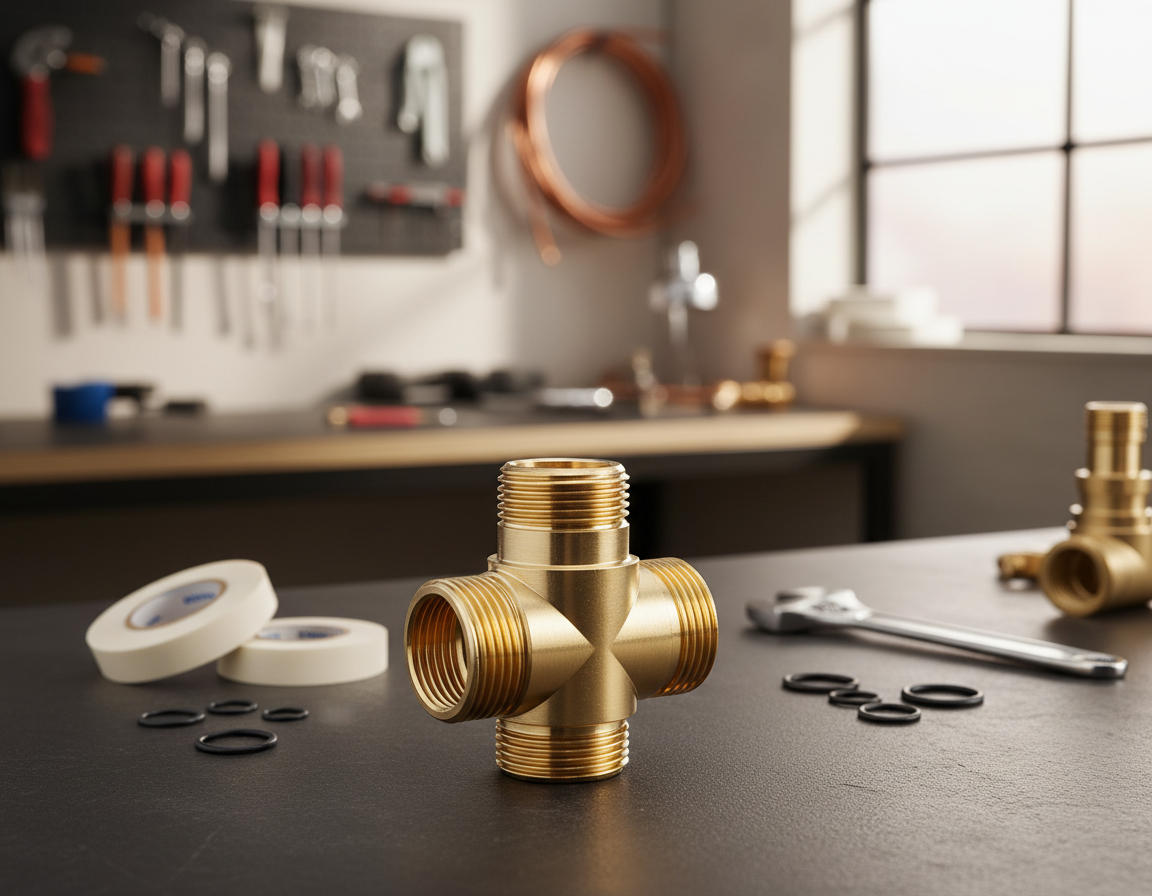
What Exactly Is A Compression Outlet Lead Free Brass Max-Adapter?
A specialized connector is used in many systems to join smooth tubing with threaded pipe ports. This component is called a compression outlet lead-free brass max-adapter.
This fitting is a specialized variation of a compression connector. Its basic purpose is to join a tube to a male pipe thread, often identified as an MIP.
Core Function And Structure
This part creates a secure and sealed transition point. It connects a smooth tube end directly to a threaded port.
No soldering or flaring is needed during the process. This simplicity makes it a popular choice among installers.
The design uses mechanical force to form a tight seal. The nut and sleeve, often referred to as the ferrule, operate together in the sealing process.
You begin by sliding the nut onto the tube and then adding the sleeve. Then, you insert the tube end into the fitting body.
As the nut tightens, the sleeve is forced against the tube and fitting body. This gripping motion holds the tube in place and creates a leak-resistant seal.
This method works on copper, polyethylene, and PEX tubing. It is a common choice for creating secure water connections.
A significant benefit is that specialized tools are not needed. In most cases, ordinary wrenches are enough for assembly.
Another benefit is easy disassembly. If future service or line modification is needed, you can just loosen the nut.
Lead-Free Safety And Compliance
The body of this adapter is made from a lead-free brass alloy. That feature is vital for safe use, particularly in potable water applications.
In the U.S., regulations strictly restrict the amount of lead allowed in potable water components. This product is designed to satisfy those demanding standards.
Lead-free materials help prevent lead from entering the water supply through leaching. That helps protect both people and the environment.
Older brass alloys contained higher levels of lead. Modern material science has developed excellent alternatives.
Modern lead-free alloys still retain the valuable qualities of brass. They continue to offer durability, machinability, and corrosion resistance.
They simply do so without the associated health risks. This marks a major step forward in plumbing safety.
| Feature | Traditional Brass Alloy | Lead-Free Brass Alloy | Primary Benefit |
|---|---|---|---|
| Lead Level | >8% (common) | 0.25% weighted average or less | Eliminates leaching risk |
| Potable Water Use | Restricted or not recommended | Fully approved | Safe for drinking water systems |
| Corrosion Resistance | Good | Excellent (with modern additives) | Extended lifespan |
| Strength | Strong | Comparably High | Dependable pressure performance |
This type of fitting is ideal where future changes are possible. Its ability to be disassembled easily makes maintenance simpler.
In short, this fitting is versatile, safe, and easy to work with. It solves connection problems in a straightforward and code-compliant way.
Understanding The Anatomy Of A Compression Fitting
Every reliable mechanical seal is built upon a simple yet ingenious interaction of parts. Understanding this anatomy is key to a successful installation.
A typical compression fitting is made up of three primary components. Those parts are the body, the sleeve, and the nut.
The number of nuts and sleeves always matches the number of connection points on the body. That three-piece arrangement is common across this type of fitting.
Body
The body is the central component of the assembly. It is the fixed part that contains the connection points.
It is commonly produced from lead-free material and contains a tapered inner seat. That seat is the area where the seal is formed.
One end accepts the smooth end of a tube. The other side generally features a threaded port to connect with another item.
Its durable design helps it manage system pressure and remain securely anchored. Precision machining here is critical for a perfect seal.
Sleeve (Ferrule)
The sleeve, also known as the ferrule, is a small yet essential ring. It is the primary sealing element in the system.
Often made from brass or a durable polymer, it slides onto the tubing first. When compressed, it undergoes a controlled deformation.
This process makes the sleeve clamp firmly onto the tube’s outer surface. It also forms a seal against the body’s tapered seat.
This dual-gripping and sealing function is the heart of the compression connection. A properly manufactured sleeve can resist vibration and repeated temperature changes.
The Nut
The nut is the part that is tightened during assembly. It engages with the outer threads on the fitting body.
As the nut is tightened, it travels axially along the tube. That motion drives the sleeve into the body’s tapered seat.
The applied force is what creates the compression. Tightening it properly is crucial for a leak-resistant seal without damaging the fitting.
This design also makes disassembly simple when required. The joint can be undone by simply loosening the nut.
Together, these three components create a strong, reliable mechanical joint. Each component plays a direct role in the overall performance and lifespan of the compression fitting.
Our specific adapter utilizes this proven design with high-grade components. This combination helps ensure long-lasting performance and reliable sealing in your plumbing work.
Key Features Of Our Brass Max-Adapter
Efficiency on the job site is directly influenced by the clever engineering of the parts you use. This specific connector is designed with several attributes that address common installer challenges directly.
The benefits are practical, ranging from quicker installs to more convenient servicing later. Let’s take a closer look at what makes this item stand out.
Three-Part Construction
This design is based on three simple parts: the nut, the sleeve, and the body. Every part serves a specific and essential purpose in forming a tight joint.
This efficient approach supports reliable sealing again and again. It also simplifies your inventory, as you only need to manage these three basic pieces.
No Flaring Equipment Required
One major benefit is that the tube does not need to be flared. That saves labor time and removes the need to buy a specialized tool.
It also lowers the skill barrier for successful installation. Even do-it-yourself installers can get strong results without extensive training.
Easy Disassembly For Maintenance
The compression mechanism is inherently service-friendly. By loosening the nut, you can separate the joint without harming the tube.
This allows for repairs or system changes without cutting the line. If the sleeve is reused, it may need replacement to ensure a perfect seal upon reassembly.
This feature drastically reduces system downtime during modifications. It provides a level of flexibility that permanent joining methods do not offer.
Taken together, these features help projects move faster while improving future adaptability. The durable lead-free alloy body also helps the fitting last through repeated service cycles.
If you need brass compression fittings built with practicality in mind, this adapter performs well. Installation Parts Supply offers these high-quality fittings for professionals who want both performance and convenience.
Technical Specs And Size Guide
This section provides the exact figures needed for a safe and compatible installation. Correctly matching your tube and thread requirements to the product is crucial.
We break down the critical data for this specific adapter. Use these details to confirm it is suitable for your system.
Size Range: Tube OD And Thread Specifications
The available size range is wide to support maximum versatility. It fits tubing with outside diameters ranging from 1/8 inch to 7/8 inch.
One side joins to smooth tubing. The other end includes a standard Male Iron Pipe (MIP) thread.
These threads follow the National Pipe Taper (NPT) standard. This helps ensure compatibility with many common plumbing parts.
| Tube Outside Diameter (OD) | Corresponding Thread Size (NPT) |
|---|---|
| 1/8″ | 1/8″ |
| 1/4″ | 1/4″ |
| 3/8″ | 3/8″ |
| 1/2″ | 1/2″ |
| 5/8″ | 1/2″ |
| 3/4″ | 3/4″ |
| 7/8″ | 3/4″ |
Installation Parts Supply stocks these adapters in the most popular sizes for immediate shipment. Always double-check your tube OD before ordering.
Temperature Range: -40°F Up To +250°F
This adapter is rated for a wide operating temperature. It works dependably in temperatures from -40°F to +250°F.
That temperature capability makes it suitable for nearly all home and commercial settings. It is built to perform in both cold conditions and hot water service.
That specification demonstrates the stability of the material and the reliability of the connection. You can trust it in both extreme cold and high-heat applications.
Material: Lead-Free Brass Construction
This fitting body is produced using a certified lead-free brass alloy. This material makeup plays a critical role in safe operation.
It complies with demanding standards such as NSF/ANSI 61-G. Those standards apply to components that contact drinking water.
Using lead-free components prevents contaminant leaching. That supports household safety and compliance with modern U.S. plumbing regulations.
The alloy also offers strong durability and excellent corrosion resistance. That helps the item deliver a long service life.
In summary, these technical specs define a versatile, safe, and robust connector. With the right size, broad temperature range, and lead-safe brass build, it supports reliable installation.
Applications: Where This Adapter Works Best
The true value of a plumbing component is revealed by the diverse tasks it can handle reliably. This connector is designed for many different applications, not just ordinary water lines.
Its strong construction allows it to work with multiple media, including liquids, gases, and fuel. This makes it a go-to item for residential, commercial, and industrial projects.
Its usefulness is evident in everything from household drinking water systems to factory machinery. Below are the primary systems where this adapter is commonly used with success.
Potable Water Systems
Supplying safe drinking water is a major priority in any plumbing system. This adapter is a perfect choice for this critical task.
Its lead-free construction meets all health standards for potable water. It can be installed confidently on both hot and cold water supply lines.
The fitting performs reliably within its broad temperature rating. It is often used in houses, apartment complexes, and restaurants.
Whether it is used with copper lines or other approved tubing, it helps maintain a clean, contaminant-free seal. That application shows how important the fitting is for safeguarding public health.
Use In Gasoline, Oil, And Vacuum Lines
This fitting is not restricted to water systems alone. It also performs well with hydrocarbons such as fuels and lubricants.
The durable material resists degradation from gasoline and oil. That makes it suitable for automotive fuel lines and machinery lubrication systems.
This fitting can also provide a dependable seal in vacuum systems. That can be useful in laboratory systems or selected HVAC components.
The mechanical grip maintains integrity under varying pressures. This level of dependability is critical for safe and effective operation in such applications.
Hydraulic And Pneumatic Applications
In industrial and mechanical environments, this connector serves additional use cases. It is commonly installed in low-pressure hydraulic and pneumatic systems.
Hydraulic systems use fluid to transmit power in machinery. Pneumatic systems operate similarly but use compressed air.
This kind of fitting is well suited for joining tubing in those control and power systems. It may be used in production machinery or instrumentation panels.
By forming a secure seal, it helps stop leaks that would otherwise reduce performance. For every one of these applications, selecting the proper tube material is a critical next step.
Material Compatibility: Copper, Aluminum, And Plastic Tubing
This versatile connector is designed to work with several common tubing materials. Each type has specific considerations for a proper seal.
Following the correct guidelines for your tube material is non-negotiable. This is necessary to make sure the joint functions correctly when pressurized.
Copper Tubing (K, L, M, And ACR Types)
These fittings are fully compatible with all standard copper pipe. That includes K, L, M, and ACR (Air Conditioning and Refrigeration) tubing.
Because copper is rigid, it is especially well suited for this connection type. The metal sleeve grips the pipe’s exterior firmly.
These applications work best in low-pressure systems that do not experience significant vibration. Always ensure the pipe end is cut square and deburred for a perfect seal.
Aluminum Tubing
Use with aluminum tubing is possible but less common in general plumbing. Because aluminum is softer, extra care is needed during installation.
Selecting the correct sleeve for aluminum applications is very important. Too much tightening can easily harm the softer wall of the tube.
Plastic Tubing (With Sleeves And Inserts)
Joining plastic tubing such as PEX or polyethylene calls for special components. A typical metal sleeve is not appropriate for this application.
A brass sleeve will cut into the soft plastic wall, leading to leaks and failure. A Delrin or comparable plastic sleeve, commonly known as a 60P sleeve, is required instead.
More importantly, a stiffening insert is mandatory. This insert, like a 61P model, slides inside the tube end.
It supports the tube internally so it does not collapse under compression. The sleeve can then grip the reinforced tube properly.
For larger sizes of plastic tubing (1/2″ OD and above), other connection methods are often recommended. On bigger lines, push-fit or crimp fittings may deliver more reliable performance.
Use the following practical guidance to achieve a successful installation each time:
- Always match the sleeve material to your tube material. Choose metal sleeves for metal tubing and plastic sleeves for plastic lines.
- Always use a stiffening insert with any non-rigid plastic tube. This step is mandatory for a durable seal.
- Double-check the adapter size against your tube‘s outside diameter before assembly.
You can get the adapter, matching Delrin sleeves, and the needed stiffening inserts from Installation Parts Supply. We supply all related parts so your project can be completed through one reliable source.
Step-By-Step Installation Instructions
Proper installation is the final, critical step that ensures your plumbing fittings perform as designed. Following the correct sequence helps produce a secure, leak-free connection every time.
These directions apply to connections involving copper, aluminum, or properly prepared plastic tubing. Let’s go through the process step by step from beginning to end.
Cutting And Preparing Tubing
The first step is to make a clean and precise cut on the tube. For best results, use a sharp tube cutter.
Rotate the cutter around the pipe to score it evenly. With each rotation, tighten the tool slightly until the tube is cut through.
That process produces a clean, square end. A crooked cut will prevent the sleeve from sealing correctly.
Next, remove any internal burrs left from cutting. This can be done using a reaming tool or a round file.
A smooth interior prevents flow restriction. It also helps the stiffening insert seat properly inside plastic tubing.
Make sure the outer surface of the pipe is wiped clean. That removes debris or dirt that could affect the seal.
Assembling Nut, Sleeve, And Body
Collect the three parts needed: the nut, the sleeve (ferrule), and the fitting body. Make sure the tapered end of the sleeve points toward the body.
Start by sliding the compression nut onto the pipe. After that, slide the sleeve onto the pipe behind the nut.
Now, insert the pipe end into the fitting body. Push it in fully until it reaches the internal stop.
A noticeable resistance should be felt when it is fully seated. A proper compression seal depends on this full insertion.
When connecting to a male iron pipe (mip) thread, verify that the adapter body is properly seated before continuing.
Tightening Techniques And Torque Tips
Start threading the nut onto the fitting body by hand. Turn it clockwise until it becomes snug.
Make sure the threads engage smoothly. Cross-threading should be avoided because it can damage the joint.
After hand-tightening, you can proceed to the final stage. Use pliers or an adjustable wrench for the final tightening.
Hold the fitting body steady with a second wrench. This prevents it from twisting and stressing other connections.
Tighten the nut with the wrench. In general, a half-turn (1/2) is sufficient for most connections.
Occasionally, another quarter-turn (0.25) will be required. The overall wrench movement should generally stay under three-quarters of a turn.
The seal is created by compression, not extreme force. Too much tightening can deform the sleeve or crush the tube, which may lead to leaks.
No thread sealant like Teflon tape is needed on these compression fitting threads. A single drop of light oil on the nut threads can ease assembly.
| Step | Action | Key Tip |
|---|---|---|
| 1. Preparation | Cut the tube square, ream the inside, and clean the exterior. | A tube cutter is recommended for best results. |
| 2. Component Order | Slide nut, then sleeve onto tube. | The tapered side of the sleeve should face the fitting body. |
| 3. Insertion | Insert the tube into the body until it bottoms out. | Make sure the tube reaches the internal seat completely. |
| 4. Hand Tighten | Thread nut on by hand until snug. | Make sure the threads engage smoothly. |
| 5. Wrench Tighten | Apply wrench for final torque. | Typically 1/2 to 3/4 turn maximum. |
| 6. Verification | Check the connection and test for leaks. | Remember that compression, not excessive force, creates the seal. |
By following these steps, you can achieve a professional-quality installation. This method reduces callbacks and ensures long-term system integrity.
Keep in mind that proper technique matters just as much as the correct part. We provide the high-quality parts and helpful guidance needed for successful installation.
Understanding OD Versus CTS Sizes
Copper tubing is measured using two sizing standards, and understanding the difference is very important. That difference is a frequent cause of mistakes in plumbing projects.
Using the wrong standard leads to mismatched parts and leaky connections. The following explanation helps make those key terms clear so the right fitting can be selected.
OD (Outside Diameter) Explained
Outside Diameter is the real physical measurement across the tube. You measure it with a caliper or a ruler.
This is the dimension used when specifying compression fitting sizes. The adapter has to match the pipe’s precise OD to seal correctly.
Think of OD as the true, real-world size of your tube. It is the only number that matters when buying these connectors.
CTS (Copper Tubing Size) Conversion
Copper Tubing Size is a traditional nominal sizing standard. It is also called the “nominal” size.
For standard copper water tubing, CTS is generally about 1/8 inch smaller than the true OD. This is simply an industry naming convention rather than a direct physical measurement.
As an example, a pipe identified as “1/2-inch CTS” measures 5/8 inch in outside diameter. Understanding that difference is critical when choosing fittings.
| Tube Outside Diameter (OD) | Copper Tubing Size (CTS) | Common Application Note |
|---|---|---|
| 3/8″ | 1/4″ | Smaller supply lines |
| 1/2″ | 3/8″ | Often used for valves |
| 5/8″ | 1/2″ | Typical water line size |
| 3/4″ | 5/8″ | Bigger supply runs |
| 7/8″ | 3/4″ | Main lines, some appliances |
Common Plumbing Size References
When buying a brass adapter, the listed size refers to the tube OD it is designed to accept. That measurement does not refer to CTS sizing.
As one example, a nominal 1/2″ copper water line has an outside diameter of 5/8″. You need a connector listed for 5/8″ OD, not 1/2″.
Our product line is labeled according to tube OD. This helps eliminate guesswork and improves compatibility.
Always identify your tube type and measure its outside diameter. This simple step prevents installation errors.
When joining to a male iron pipe thread (MIP), the proper adapter is necessary. The tube end should fit snugly into the compression body.
Matching the OD ensures that the sleeve can grip the tubing properly. A correct grip is essential for forming a watertight connection.
Understanding this is essential for a successful leak-free installation. Be sure to confirm sizes before finishing the connection.
Benefits Of Lead-Free Brass For Potable Water
When a fitting comes into contact with drinking water, its material composition matters just as much as its performance. Modern plumbing codes reflect that concern by requiring safer materials to protect health.
Using components made from certified lead-free alloys is now standard for good reason. That approach provides the combined advantages of safety, longevity, and regulatory compliance.
These benefits apply both inside the home and in the broader environment. Choosing the correct material is a smart and responsible long-term decision.
Health And Environmental Benefits
Older brass alloys included some lead to make machining easier. As time passed, this lead could enter the flowing water through leaching.
Even small amounts of exposure can create serious health concerns, particularly for children. It can affect neurological development and cause other long-term issues.
Switching to lead-free brass eliminates this contamination risk at the source. As a result, the water is better protected for household use.
This decision also helps the environment. It helps reduce lead contamination in wastewater and surrounding ecosystems.
Safer manufacturing and recycling processes are additional pluses. The entire product lifecycle becomes more sustainable.
Meeting US Plumbing Standards
In the United States, strict laws govern materials for drinking water systems. These regulations are built on the framework of the Safe Drinking Water Act.
Important certifications include NSF/ANSI 61, Section 9. They verify that a product’s lead content is within the legal safe threshold.
The brass compression fittings offered by Installation Parts Supply comply with these strict standards. That means they can be used confidently in potable water systems.
This level of compliance is mandatory in professional installations. It is required in order to protect health and satisfy inspection standards.
Our products include the required certifications for added peace of mind. We make sure every component complies with code.
Corrosion Resistance And Durability
In addition to safety, this modern alloy provides excellent physical properties. It performs well against both corrosion and scaling.
This helps the fittings preserve their integrity over time, even in difficult water conditions. This leads to a dependable, long-term connection.
The material performs well across a broad range of pressures and temperatures. It resists degradation and brittleness over time.
When compared to common alternatives, its strengths are clear. The following table summarizes the main differences.
| Material | Key Advantage | Typical Use Case | Consideration for Potable Water |
|---|---|---|---|
| Lead-Free Brass | Superior strength & temperature tolerance | Hot/Cold water lines, Hydraulic connections | Fully approved and safe; ideal choice. |
| Plastic (e.g., PVC) | Low cost & chemical resistance | Drain lines, Irrigation | Not suitable for hot water and may affect taste. |
| Carbon Steel | Very high pressure rating | Industrial gas lines | Prone to rust; not suitable for water. |
Although the upfront cost may be a bit higher than plastic, the long-term value is clear. The long-term safety, reliability, and service life provide an excellent return.
Choosing certified free brass components is a future-proof decision for any project. It safeguards health today and ensures performance for years to come.
Installation Parts Supply is dedicated to supplying these high-quality, code-compliant products. We help you build systems that are both strong and safe.
Why Choose Installation Parts Supply
In the world of plumbing installations, where you buy your fittings is as critical as which fittings you buy. The supplier behind the product affects reliability, stock availability, and customer support.
Installation Parts Supply has earned its place as a premier wholesale distributor for good reason. Our reputation is built on quality, value, and excellent service for every customer.
We do more than just provide parts. We support you throughout the project to help deliver a successful result.
Quality Assurance And Product Sourcing
Every item we stock goes through a strict verification process. We source exclusively from reputable manufacturers known for their high standards.
As a result, each compression fitting and adapter is built to meet or exceed industry specifications. Customers receive parts made for reliable performance and compliance with code.
Our lead-free brass products, for example, carry official ratings like NSF/ANSI 61-G. This confirms that they are suitable for potable water use.
We also stock all the supporting parts you may need. That includes the right sleeve for your tube type as well as stiffening inserts for plastic tubing.
Pricing And Availability
At Installation Parts Supply, we believe value matters. Our pricing model supports strong quality without unnecessary premium pricing.
We maintain an extensive in-stock selection of the most popular sizes and types. Our inventory covers connectors for copper, plastic, and other forms of tubing.
Whether you need a common 1/2″ mip adapter or a specialized item, we likely have it ready to ship. This helps prevent project slowdowns and keeps work moving forward.
We use a strong logistics network to support prompt delivery across the country. You get the parts you need, when you need them.
Technical Support And Customer Service
Our trained staff is ready to answer technical questions. Our team is familiar with the finer points of compression fittings and thread specifications.
We can guide you toward the correct product for your particular application. We offer guidance on proper installation techniques to avoid leaks.
Our support includes everything from proper nut torque to selecting between mip and other thread styles. We ensure you have the knowledge for a successful end result.
At Installation Parts Supply, customer service is one of our core priorities. We are available to help with order placement, shipment tracking, and post-purchase questions.
| Supplier Attribute | Typical Hardware Store | Online Marketplaces | Installation Parts Supply |
|---|---|---|---|
| Quality Assurance | Varies; mixed brands | Unverified; possible counterfeit risk | Rigorous; sourced from trusted makers |
| Price Competitiveness | Higher retail markup | Low price, but hidden costs | Wholesale value with fair, consistent pricing |
| Product Availability | Limited to common sizes | Potentially long shipping times | Large in-stock inventory |
| Technical Expertise | Basic general support | Little to no technical expertise | Expert plumbing & fitting support |
| Code Compliance | Not guaranteed | Often unclear | Documented, certified, and clear |
This comparison highlights the professional-grade balance we provide. Every purchase includes the benefit of reliable product ratings and performance information.
Installation Parts Supply is your single source for all compression fittings needs. From the adapter itself to sleeves, inserts, and tools, we have it all.
Choose us for your next project. Experience the value of working with a dedicated and customer-focused supplier.
Conclusion: Dependable Plumbing Solutions
The final objective for both professionals and DIY users is a leak-free plumbing system. The right adapter helps provide safety and durability in water, gas, or air lines.
The lead-free construction of this product makes it suitable for potable water safety. Its durable design can handle different fluids while keeping installation straightforward.
Be sure to match the tube’s OD and use the correct installation methods. A proper fit helps prevent leaks at every connection end. Always prepare the tube end properly before assembly.
These guidelines apply to plastic tubing and other tube materials. Always use the proper sleeve with plastic lines.
For male iron pipe (mip) connections, a secure seal is essential. Secure the mip connection firmly. The compression mechanism creates a reliable joint.
You can get this essential item and all needed components from Installation Parts Supply. Browse our full selection for your next project.
Investing in high-quality components guarantees system longevity and peace of mind. It is a smart choice for any well-executed job.